
Last Updated: October 31, 2026
Quick Summary
Yes, you can reuse modular wall panels, and that is the whole point of the modular design. Modular felt and fabric panels are fully reusable because they hang on clips, rails, or no-drill adhesive systems and lift off intact. Reusability depends on how the panel attaches, how you remove it, and what condition it lands in.
- Tiles are not reusable; once cut and set, they are a one-way material.
- Photograph the full layout and label each panel with its position number before removal.
- Skip metal pry bars, which mark walls and gouge panel edges.
- Retire any panel that fails two or more condition checks.
- Treat adhesive strips as single-use and budget for replacement strips over time.
Table of Contents
- Can You Reuse Modular Wall Panels?
- How to Remove Wall Panels Without Damage
- Checking Panel Condition Before You Reuse Them
- How to Reinstall Modular Wall Panels in a New Room
- Storing Wall Panels Between Moves
- Reusable Adhesive Wall Panels: What to Know Before You Buy
- Explore DwellForms™ for Your Next Space
- Frequently Asked Questions
Can You Reuse Modular Wall Panels?
Yes, you can reuse modular wall panels, and that is the whole point of the modular design. Unlike glued-on wallpaper or nailed timber battens, modular panels lift off, travel with you, and go back up on a new wall. DwellForms™ kits are designed around this idea: colour and texture you can take down, pack flat, and rebuild in your next place.
The catch is that “reusable” is not a yes-or-no answer. For the full explainer on reusable wall panels, how removable panels attach and what to check with your landlord, see our dedicated guide. It depends on how the panel attaches, how you remove it, and what condition it lands in.
Which Panel Types Are Actually Reusable
Some panel types come off cleanly. Others are effectively permanent once fitted. Here is how the common options stack up:
- Modular felt and fabric panels: Fully reusable. They hang on clips, rails, or no-drill adhesive systems and lift off intact.
- 3D wall panels and fluted panels: Usually reusable if fixed with clips or removable adhesive rather than construction glue.
- WPC panels and sandwich panels: Reusable in principle, but often fixed with screws or sealant that damages edges on removal.
- Wood panelling and board and batten: Reusable only if screwed, not glued. Screw holes need filling before a second install.
- Steel cladding: Reusable, but heavy and rarely suited to rental interiors.
- Tiles: Not reusable. Once cut and set, they are a one-way material.
The rule of thumb: the less permanent the fastener, the more reusable the panel.
Reusability depends on how each panel type is fixed, so here is how the common options stack up.
| Panel type | Reusable? | Note |
|---|---|---|
| Modular felt and fabric panels | Fully reusable | Hang on clips, rails, or no-drill adhesive systems |
| 3D wall panels and fluted panels | Usually reusable | If fixed with clips or removable adhesive, not construction glue |
| WPC panels and sandwich panels | Reusable in principle | Screws or sealant often damage edges on removal |
| Wood panelling and board and batten | Only if screwed | Screw holes need filling before a second install |
| Steel cladding | Reusable | Heavy and rarely suited to rental interiors |
| Tiles | Not reusable | Once cut and set, a one-way material |
How to Remove Wall Panels Without Damage
Removal is where most reuse plans succeed or fail. Our damage free wall panels renter’s guide covers adhesive options and risk-free removal. Go slow, work from one edge, and never yank.
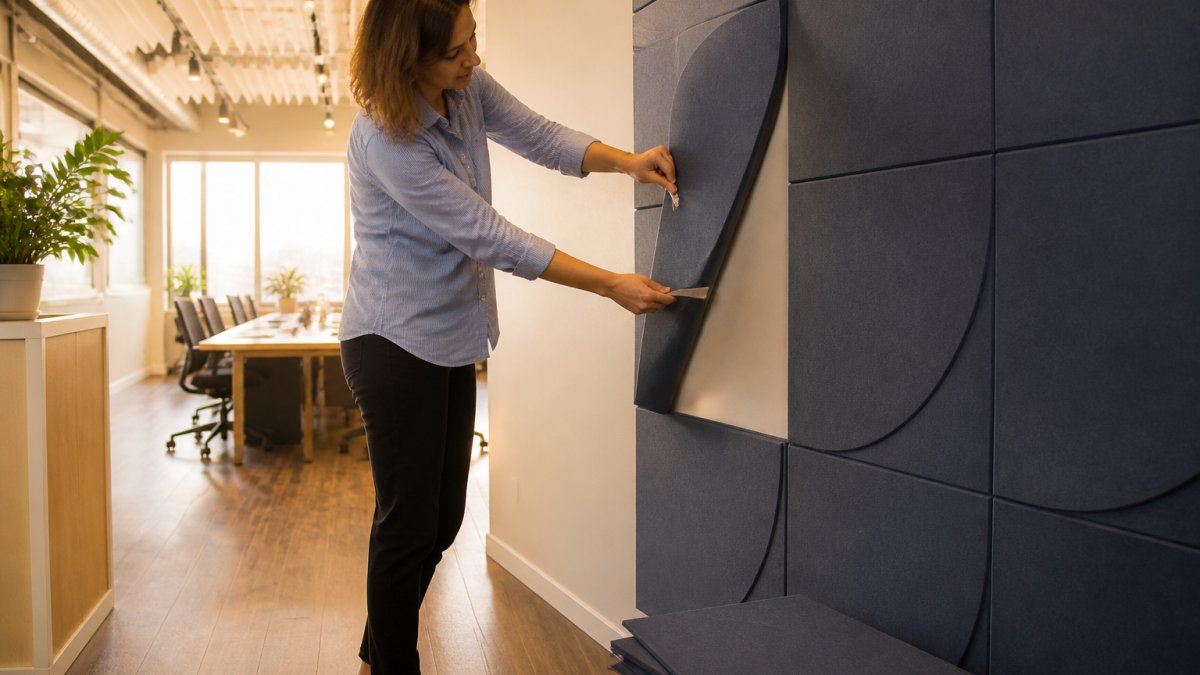
Work through it in this order:
- Clear the area and lay a soft blanket on the floor for panels to land on.
- Photograph the full layout before you touch anything. You will want it later.
- Start at a corner or edge panel, not the middle of the run.
- Slide a flat plastic tool behind the panel and ease it away gently.
- Support the panel with your free hand as the fastener releases.
- Label the back of each panel with its position number.
- Stack panels face to face, never face to wall.
Watch out: pulling a panel straight off the wall in one motion is the single most common way people crack backing boards and tear paint. Slow, steady pressure beats force every time.
Tools to Have Ready Before You Start
You do not need much, but a few small items make the job safer:
- A flat plastic scraper or trim tool
- A soft blanket or moving quilt
- Painter’s tape and a marker for labelling
- A screwdriver for any screwed fixings
- A small brush and mild soap for cleaning edges
- A camera or phone for recording the layout
Skip metal pry bars. They mark walls and gouge panel edges.
Checking Panel Condition Before You Reuse Them
Inspect every panel before you commit to reusing it. A quick check now saves a wobbly wall later.
Run through this checklist:
- No cracks, splits, or crushed corners
- Backing board flat, not warped or water-stained
- Fastener points intact and not torn
- Surface clean and free of adhesive residue
- Colour and texture still even across the set
- No mould or damp smell
If a panel fails two or more checks, retire it. A damaged panel weakens the run around it. For panels that pass, a light clean with mild soap and a soft cloth is all most need.
How to Reinstall Modular Wall Panels in a New Room
Reinstallation follows the same logic as the first install, just with a new wall to read. The difference is that you are working with existing hardware and panels that have already been handled, so compatibility and substrate checks matter more than they did the first time.
Check hardware compatibility first
Before anything goes on the wall, decide what you can reuse and what needs replacing:
- Clips and rails: Reusable if not bent, cracked, or missing teeth. Compare the profile against the manufacturer’s current specification, a clip that has been superseded may not hold the panel at the same depth.
- Screws and fixings: Replace any screw with a damaged head, stripped thread, or corrosion. Reusing a weakened screw in a new substrate is a common cause of pull-out.
- Adhesive strips: Treat as single-use. Adhesive weakens with dust and repeated handling, so budget for replacement strips over time.
- Panel-mounted hardware: Check that the fastener points on the panel itself are sound. A torn or enlarged hole will not hold a new fixing securely.
If the original hardware is discontinued or you cannot confirm its rating, source new hardware from the panel manufacturer rather than mixing systems.
Read the new wall
Start by mapping the wall. Note power points, switches, and any awkward angles. Then check the substrate:
- Plasterboard and drywall: Confirm there is solid framing or a suitable anchor behind each fixing point. Adhesive systems need a clean, sound painted surface.
- Masonry and concrete: Expect to need mechanical fixings or a batten system; adhesive alone is rarely suitable.
- Textured or freshly painted walls: Test adhesive on a hidden patch first and give it a few days before committing the whole run.
- Walls with hidden services: Before drilling or fixing, check for wiring and pipework. If you are unsure, have the wall scanned or consult a licensed tradesperson.
Dry-fit your panels on the floor to test the arrangement before fixing anything to the wall. For renter-friendly fixing, our guide to extending wall panels without drilling covers adhesive testing, colour matching, and trimming. Corners are the fiddly part, and this walkthrough on no-drill panel corners explains clean finishing with a small expansion gap.
Reinstall rules
- Reuse the same fastener positions where possible, but never force a fixing into a damaged hole, drill a fresh point instead.
- Keep panels level as you go, checking with a spirit level every few panels.
- Leave a small gap at edges to allow for movement.
- Confirm the new layout does not block access to switches, sockets, or service points.
Panels that no longer fit a smaller wall can be trimmed along the edge, or split into a new arrangement. Modular systems are forgiving here: a layout that filled one bedroom wall can become a feature strip in a smaller office.
If the panels are being reused in a commercial or multi-unit setting, check with the manufacturer and your local building authority before reinstalling. Fire performance, surface spread of flame, and fixing requirements can differ from the original installation, and older panels may not meet current requirements.
Storing Wall Panels Between Moves
Storage is where good panels quietly go bad. Damp, weight, and sunlight do the damage.
Store panels flat, face to face, in a dry room. Keep them off concrete floors and away from direct sun. Do not stack heavy boxes on top, and never lean panels against a wall for weeks on end, as edges warp under their own weight. Wrap them in breathable moving blankets rather than sealed plastic, which traps moisture.
If storage will stretch past a few months, check them once a season for damp or bowing.
Reusable Adhesive Wall Panels: What to Know Before You Buy
Reusable adhesive wall panels are panels fixed with a removable adhesive system rather than screws or nails, so they can be taken down and refitted without new holes. The adhesive quality decides everything.
What to check before buying:
- Does the manufacturer call the adhesive removable and reusable?
- Is there a stated weight limit per panel?
- Will it hold on textured, painted, or slightly glossy walls?
- What surface prep does it need?
Adhesive weakens with dust and repeated handling, so budget for replacement strips over time. On tricky walls, test a small patch first and give it a few days before committing the whole run.
Explore DwellForms™ for Your Next Space
Reuse only works if the system is built for it. DwellForms™ kits use 100% recycled PET felt panels that hang without paint or drilling, and they are designed to be moved and reconfigured as your space changes.
That means a feature wall today can be reconfigured into a new arrangement in your next place. Because the panels are non-permanent, they require no paint or drilling.
Ready to build a wall you can take with you? Shop DwellForms™ Wall Panel Extension Kits to expand compatible wall layouts. Explore DwellForms™ and turn a blank wall into something that moves when you do.
Frequently Asked Questions
Can adhesive wall panels be reused after removal?
Most reusable adhesive wall panels can be taken down and put back up, provided the backing is still tacky and the panel itself is undamaged. Peel slowly from the top corner, keep the adhesive surface clean, and avoid stretching the panel as it comes away. Always check the manufacturer’s guidance, because some adhesive-backed products are designed for one-time use only.
How do you store modular wall panels between uses?
Store panels flat or standing upright in a dry, dust-free space, never stacked under heavy items. Wrap each panel in a soft cloth or sheet if you are moving them, and keep them away from direct sunlight and damp garages. Label the back of each panel with its position if you plan to rebuild the same layout. For felt or fabric panels, a breathable cover is better than plastic, which can trap moisture and cause mould.
Can you reinstall wall panels on a different wall?
Yes, in most cases. Measure the new wall first, because a smaller or oddly shaped space may need panels trimmed or the layout reconfigured. Check that the new surface is clean, dry and reasonably smooth so fasteners or adhesive can grip. If the new wall is textured or has awkward angles, use a mounting system rated for that surface rather than relying on adhesive alone. Panels that were cut for one room can still be reused, but plan the layout before cutting anything further.
How can you tell if a wall panel is still safe to reuse?
Inspect each panel for cracks, warping, delamination, water stains or mould before reinstalling. A panel that flexes out of shape or has soft, crumbling edges is not worth reusing. Check fasteners and clips too: bent metal clips or stripped screw holes should be replaced rather than forced back into service. If a panel was mounted near moisture and shows any sign of swelling or discolouration, retire it. Clean panels with a damp cloth and let them dry fully before storage.
Moving house should not mean losing the colour and texture you built. Lifted Plus makes modular wall kits that lift off cleanly, store flat, and rebuild in a new room without a single hole. With no-drill fixing, 100% recycled PET felt panels, and a system made to be reconfigured, your next place starts ahead. Get started with Lifted Plus and create a wall that travels with you.

