

Last Updated: November 11, 2026
Quick Summary
Eco friendly wall art is decoration made from recycled, renewable or responsibly sourced materials, finished without harmful chemicals, and designed to last or be reused rather than thrown away. Judge every piece on three tests: what it is made from, how it is finished, and where it ends up when you move out.
- Reclaimed timber, recycled PET felt, jute and bamboo carry far lower embodied carbon than virgin plastics or newly felled hardwood.
- Ask the seller what the piece is sealed with, not just what it is made from, because finishes are rarely listed.
- Water-based low-VOC and zero-VOC paints are the default choice for bedrooms and nurseries where ventilation is poor.
- Untreated or oiled timber can be reused or composted, but timber with unknown lacquer belongs in a transfer station’s timber stream.
- Most kerbside collections will not take recycled PET felt, so ask the supplier about a take-back or remount programme.
Table of Contents
- What Actually Makes Wall Art Eco Friendly
- Quick Comparison: Seven Eco Friendly Wall Art Options
- 1. Lifted Plus DwellForms: Recycled PET Felt Wall Panels
- 2. Envirohacking Eco-Friendly Wall Art
- 3. Art by Earth Frameless Canvas Prints
- 4. H&M Textured Wall Art
- 5. Reclaimed Wood Wall Art
- 6. Jute and Natural Fibre Wall Hangings
- 7. Living Plant Walls and Vertical Gardens
- Frequently Asked Questions
What Actually Makes Wall Art Eco Friendly
Eco friendly wall art for homes is decoration made from materials that are recycled, renewable or responsibly sourced, finished without harmful chemicals, and designed to last or be reused rather than thrown away.
Most buyers only check the first one. That is the mistake. A recycled timber frame finished in a high-solvent lacquer, wrapped in plastic and glued permanently to a wall, is not a sustainable choice. It just looks like one.
Materials, Finishes and the Lifecycle Question
Start with the material. Reclaimed timber, recycled PET felt, jute, bamboo and natural fibres carry far lower embodied carbon than virgin plastics or newly felled hardwood, because the energy-intensive extraction has already happened.
Then check the finish, because this is where most “eco” claims quietly fall apart. Paints, lacquers, adhesives and sealants are the part of a piece that off-gasses into the room, and they are rarely listed on a product page. A few mechanisms are worth understanding:
- VOC content. Volatile organic compounds are the solvents that evaporate after application and give new paint its smell. Water-based low-VOC and zero-VOC paints are widely available now, and they are the default choice for bedrooms and nurseries where ventilation is poor.
- Solvent vs. water carriers. A high-solvent lacquer may give a harder, more durable finish, but it releases more during curing. A water-based polyurethane or a natural oil-wax finish trades a little durability for a much lower immediate load on indoor air.
- Oils and waxes. Hardwax oils and plant-based finishes penetrate the timber rather than sitting on top as a film, which means they can be spot-repaired instead of sanded back and recoated, a genuine lifecycle advantage, not just a health one.
- Adhesives. Permanent pressure-sensitive strips and construction adhesives are hard to remove and often the reason a piece cannot be reused. Mechanical fixings and removable mounts keep the option open.
A practical test: ask the seller what the piece is sealed with, not just what it is made from. For a deeper look at whether the spend is justified, our breakdown of whether sustainable wall panels are worth it for home interiors covers the trade-offs. For readers who want concrete renter-safe ideas to picture the options, these renter safe eco wall decor ideas show what is possible without a drill.
Finally, ask the lifecycle question nobody asks: what happens when you move? A framed print you can rehang anywhere beats a mural you must paint over. That question is covered in full in the circularity section below.
Quick Comparison: Seven Eco Friendly Wall Art Options
Here is the short version. Every option below is genuinely more sustainable than mass-market decor, but they suit different rooms and different leases, and, just as importantly, they end their lives in very different ways.
| Option | Material | Renter Friendly | Best For | End of Life |
|---|---|---|---|---|
| Lifted Plus DwellForms | 100% recycled PET felt | Yes, no drill | Bold feature walls | Remountable; check local textile recycling |
| Envirohacking Wall Art | Not specified | Depends on mount | Size-flexible prints | Depends on substrate, ask before buying |
| Art by Earth Canvas | Frameless canvas | Yes, light | Apartment walls | Canvas fibre rarely recyclable; frame-free helps |
| H&M Textured Art | Textured decor | Depends on mount | Affordable texture | Mixed materials; usually landfill |
| Reclaimed Wood Art | Salvaged timber | No, needs fixing | Character homes | Timber can be reused or composted if untreated |
| Jute Hangings | Natural fibre | Yes, hook only | Soft organic texture | Biodegradable in commercial composting |
| Living Plant Walls | Live plants | No, needs fixing | Biophilic statement | Components separate; growing medium compostable |
Felt panels suit renters well, and our comparison of felt wall panels vs peel and stick covers the differences. If you are weighing panels against prints, read this guide to mixing wall panels with art for renters before you commit to a layout.
Disposal and Circularity: The Question Most Guides Skip
Many eco wall art guides stop at the buying decision.
Work through the material groups:
- Timber and reclaimed wood. Untreated or oiled timber can be reused, repurposed into shelving or composted at end of life. Timber carrying an unknown lacquer or varnish should not go into compost or a home garden; it belongs in a transfer station’s timber stream where it can be sorted.
- Natural fibres such as jute and cotton. These are compostable in a commercial composting system, but only if they are free of synthetic backing, plastic hangers and dye-heavy finishes. Cut the hardware off before you compost.
- Recycled PET felt. The material gives waste plastic a second life, which is a real benefit, but it is still a plastic and most kerbside collections will not take it. Ask the supplier whether they run a take-back or remount programme; modular systems are designed to be rebuilt, not binned.
- Canvas prints. A stretched canvas is usually a cotton-polyester blend stapled to a timber stretcher. The staples make separation fiddly, and most municipal collections will not accept it. Frameless canvas avoids the frame waste but does not solve the fibre problem.
- Living walls. The mounting structure, irrigation lines and growing medium all have separate disposal routes. Plan for dismantling before you install.
The practical rule is the same one that governs the buying decision: the more a piece is designed to be taken apart, remounted or repaired, the longer it stays out of landfill.
Watch out: “biodegradable” on a label does not mean it will break down in a home compost bin or a kerbside collection, check what your local council accepts before you rely on it.
1. Lifted Plus DwellForms: Recycled PET Felt Wall Panels
Our top pick for renters is the DwellForms™ range, because it solves the problem the other six options only half-solve. The panels are 100% recycled PET felt, modular by design, and mounted without drilling or painting. Designed to be moved and reconfigured, they can be rebuilt somewhere else.
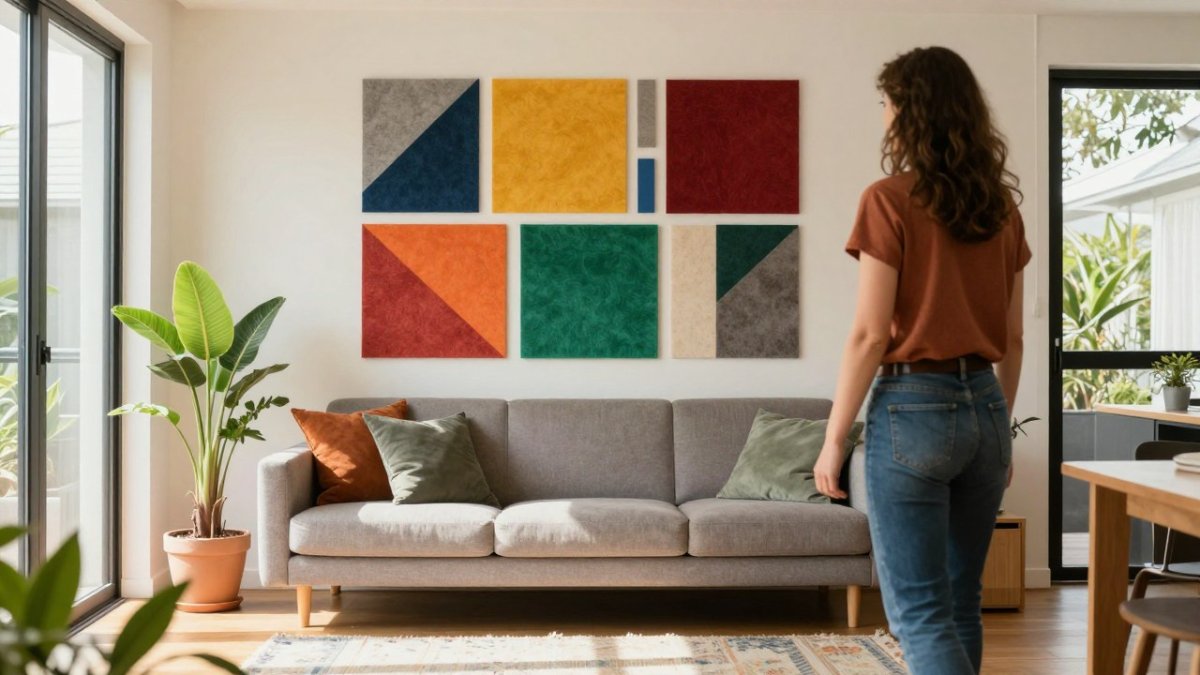
The panels add colour, texture and architectural shape to a plain room, and they are designed to be moved and reconfigured.
You can see the full range and explore DwellForms™ on the Lifted Plus website for current pricing and kit sizes.
2. Envirohacking Eco-Friendly Wall Art
Some third-party eco wall-art listings offer size options. The size choice is the useful part: you can scale a piece to a small hallway or a full lounge wall without paying for a custom commission.
What the listing does not tell you is the material, the dimensions or the mounting method. That matters.
Best for: shoppers who want a size-selectable piece at a known price.
Skip if: you need to know exactly what it is made of before you spend.
3. Art by Earth Frameless Canvas Prints
Frameless canvas removes one of the hidden sustainability costs of wall art: the timber frame. No frame means less material, less weight, and a lower chance of the piece being binned because the frame got damaged in a move.
Canvas suits apartment walls well. It is light enough for adhesive hooks, and it reads as a considered piece rather than a poster.
Best for: apartment dwellers who want a gallery look with minimal hardware.
Skip if: you need a piece that can take knocks in a high-traffic hallway.
4. H&M Textured Wall Art
Textured wall art can add depth to a flat wall without needing colour or pattern. Texture is doing real work here: a textured surface adds depth to a flat wall without needing colour or pattern.
The honest limitation is provenance. The listing does not establish eco-friendly materials, and availability in this market is not confirmed. Treat this as a style option first and a sustainability option second, and check the material composition before you order.
Best for: buyers prioritising texture and affordability over verified materials.
Skip if: material transparency is your deciding factor.
5. Reclaimed Wood Wall Art
Reclaimed wood wall art is the strongest lifecycle story on this list.
It is also the least renter-friendly option. Reclaimed pieces are heavy, they need proper fixings, and they leave holes.
Watch out: reclaimed timber can carry old finishes. Ask what the piece was sealed with, and avoid anything with unknown coatings in a bedroom or nursery.
Best for: homeowners adding character with a genuine reuse story.
Skip if: you rent, or you cannot confirm the finish.
6. Jute and Natural Fibre Wall Hangings
Jute wall hangings deliver organic texture and natural fibres at a low material cost, and they are light enough to hang from a single adhesive hook.
The trade-offs are real. Natural fibres shed, they can discolour in strong direct sun, and they collect dust in a way that flat art does not.
Best for: bedrooms and soft, low-traffic spaces where texture matters more than durability.
Skip if: the wall gets direct sun or the room runs humid.
7. Living Plant Walls and Vertical Gardens
A living wall is the most biophilic option available, and biophilic design is well documented as a way to improve how a room feels.
It is also the highest-maintenance choice by a distance. Live plants need light, water and drainage, and a vertical garden needs a proper mounting system.
Best for: homeowners with good light and a willingness to maintain.
Skip if: you rent, travel often, or the wall gets no natural light.
The real challenge with eco friendly wall art for homes is not finding something green.
Frequently Asked Questions
What materials make wall art eco friendly?
Look for recycled or reclaimed content, low-impact processing and a finish that does not off-gas. Recycled PET felt, reclaimed timber, jute, bamboo and organic cotton all qualify. Frameless canvas avoids a separate frame, which cuts material use. Ask what the piece is printed or dyed with: water-based, low-VOC inks and non-toxic finishes matter as much as the substrate. A product made from recycled material but coated in a solvent-heavy finish loses most of its advantage.
How can I decorate my walls sustainably without damaging them?
Choose mounting methods that rely on tension, hooks over existing picture rails, or adhesive systems rated for your wall type, and avoid anything requiring drilled anchors. Modular panels that clip or hang without fixings come down cleanly and go back up in the next place. Test any adhesive on a hidden patch first, especially on textured or painted surfaces, and give it the full recommended removal window before you commit to a whole wall.
Are recycled PET felt wall panels a good choice for eco-friendly decor?
They suit renters and frequent movers well. Recycled PET felt is made from post-consumer plastic bottles, is lightweight, and holds its shape without a rigid backing, so panels can be repositioned repeatedly. Check the recycled content percentage and whether offcuts or end-of-life panels can go back into a recycling stream, since felt is not widely kerbside-recyclable.
Where can I buy sustainable wall art in New Zealand?
Options range from specialist eco art retailers and maker marketplaces to design-led modular systems sold direct. Prices vary widely across sellers. For modular felt panels, pricing depends on how much wall you are covering, so check the brand’s site for current kit pricing and coverage per panel before you budget.
Can renter friendly wall art also be eco-friendly?
Yes, and the two goals often align. Renter friendly wall decor tends to be lightweight and removable, which usually means less material and no adhesive residue or drilled holes to patch. Modular felt panels, canvas prints hung from a picture rail and textile hangings all fit both briefs. The piece you can take with you also avoids the cycle of buying, binning and rebuying each time you move, which is where the real carbon saving sits.

