
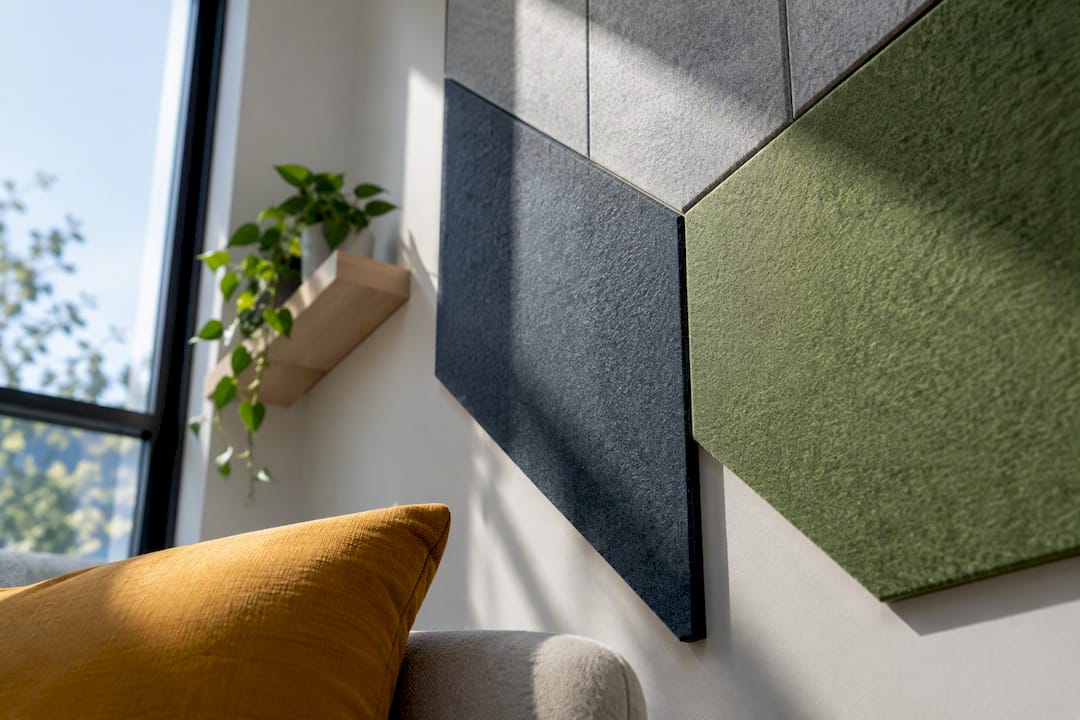
Geometric wall decor works because it introduces order and energy to a room at once, and you can build that effect with paint, framed prints, or a removable panel system like DwellForms™. Start by picking your scale (one bold statement or a grid of smaller pieces), thread two or three colours through the composition, then choose your method: brush, print, or a no-drill panel kit.
TL;DR:
- Geometric wall decor benefits from using one dominant shape family, such as triangles or hexagons, which should make up about 70% of the design for cohesion.
- Removable systems like DwellForms™ allow renters to create textured, layered geometric walls without drilling or painting, ideal for short-term or temporary setups.
- Large-scale pieces and layered textures tend to be more popular and impactful than small scattered prints, especially in current decor trends.
- Maintaining consistent spacing of 5 to 7 centimeters and hanging arrangements at eye level around 57 inches from the floor enhances visual harmony.
- Using painter’s tape for planning, templates, or peel-and-stick panels can help achieve clean geometric shapes and proportions before permanent installation.
Table of Contents
- 12 geometric wall decor ideas worth trying
- Choosing shapes, scale and colour that read as intentional
- DIY techniques for painting and hanging geometric shapes
- Adding texture so geometric patterns don’t feel flat
- Renter-friendly ways to build a geometric feature wall
- Styling geometric walls that feel like yours, not a trend
- Try DwellForms™ before you touch a paintbrush
- Sources
- FAQ
12 geometric wall decor ideas worth trying
Some of these ideas need a weekend and a steady hand. Others need nothing more than a set of removable panels and twenty minutes.
- Painted triangles or diagonal colour blocks. A single accent wall split into two or three angular colour fields gives a room a graphic anchor without crowding it with objects.
- Tumbling blocks or hexagon ombré. A painted motif that fades from one hue to the next across a cluster of hexagons reads as considered rather than busy.
- Grid gallery with identical frames. A 2×2, 2×3, or 3×3 formula using matching frames is the most forgiving layout for a first attempt at geometric wall decor.
- Asymmetric trio anchored by a large print. One oversized piece flanked by two smaller ones creates hierarchy instead of a flat, evenly weighted wall.
- Horizontal salon band above furniture. A low, wide run of small geometric prints above a sofa or console echoes the furniture line beneath it.
- Oversized diptych or triptych. Splitting one bold geometric composition across two or three panels gives small rooms a large-scale focal point without a single overwhelming canvas.
- Modular felt-panel compositions. DwellForms™ patterns let you build a sculptural, mosaic-style arrangement from individual panels, shifting shapes until the layout feels right, before anything is fixed to the wall.
- Layered wood or metal sculptures. Dimensional geometric pieces catch light differently through the day, giving a static wall a sense of movement.
- Geometric shelving or floating boxes. Angular shelf clusters double as display space and abstract wall art at once.
- Mixed-media textile or shadow-box pieces. Fabric, cork, or layered card inside geometric frames adds tactile interest that flat prints can’t match.
- Small-area treatments for stairwells, bathrooms, or nooks. A tight cluster of three or four small geometric pieces suits a landing or hallway where a full gallery wall won’t fit.
- Temporary washi-tape trials. Before committing to paint or panels, tape out your shapes directly on the wall to see how the proportions actually sit in the room.
Elle Decor’s roundups of current geometric wall treatments consistently favour oversized pieces, layered textures, and bold colour-blocking over small, scattered prints, a trend worth keeping in mind before you commit to a layout.
Choosing shapes, scale and colour that read as intentional
Cohesion comes down to restraint, not variety. A geometric wall that mixes five different shape families in five different colours reads as clutter no matter how nice each piece is on its own.
- Follow the 70/30 rule: let one shape family (triangles, hexagons, circles) dominate roughly 70% of the composition, with a supporting shape making up the rest.
- Scale to your furniture: a single oversized piece should span roughly two-thirds the width of the sofa or console beneath it; multi-piece grids should sit within that same width, aligning with popular interior door designs and trends that emphasize architectural lines as focal points.
- Hang at eye level. Gallery-wall convention puts the centre of the arrangement at 57 inches (approximately 145cm) from the floor, which keeps the composition readable whether you’re standing or seated nearby.
- Keep spacing tight and consistent. Recommended spacing sits at a tight and consistent gap between pieces in a grid or gallery layout, since wider gaps make a group of related shapes feel disconnected.
- Thread colour through the piece. Pick two or three recurring hues and one frame or panel finish, and repeat them across every element in the composition.
Better Homes & Gardens backs the same spacing and unifying-colour approach for gallery walls generally, and it holds just as well for a wall built entirely from geometric shapes.
DIY techniques for painting and hanging geometric shapes
Most geometric accent walls come down to three tools: painter’s tape, a level, and patience.
- Measure and tape first. Mark your key points with a pencil, then run painter’s tape between them to define each shape before you touch a brush to the wall.
- Use a stencil or projector for complex motifs. Repeating hexagons or intricate tessellations are far easier to trace from a projected image than to measure freehand.
- Size your prints to the layout. For a grid, prints in the 30x40cm to 50x70cm range tend to scale well against most living-room and bedroom walls, tightened up with 5–7cm spacing so the group reads as one composition rather than several unrelated frames.
- Choose removable hanging methods where permanence isn’t wanted. Adhesive strips and tested adhesive pads avoid the wall damage that comes with nails or screws, and they matter most if you’re renting or simply don’t want holes in a wall you might repaint next year.
- Peel tape carefully and touch up edges. Pull tape away at a shallow angle before paint fully cures to keep lines sharp.
Pro Tip: Cut your shapes out of paper first and tape the whole arrangement to the wall before you paint or fix anything permanently. Standing back and photographing it from where you’d normally sit reveals proportion problems that are hard to picture on paper alone.
Adding texture so geometric patterns don’t feel flat
A wall of flat colour blocks or thin prints can start to feel clinical, especially in a small room where the eye has nowhere else to land. Texture is what stops that from happening.
- DwellForms™ modular felt panels bring dimensional shape and colour together in one piece, so the wall has depth without a single extra layer of styling.
- Ribbed or fluted panels catch light differently depending on the time of day, which gives even a simple triangle or chevron motif a sense of movement.
- Wood or metal sculptural pieces layered over a painted geometric base add a third dimension that flat art alone can’t provide.
- Angle a lamp or picture light across a textured panel rather than straight on. The resulting shadow lines do more to define the shapes than the colour itself.
- Headwalls, hallways, and home offices are the rooms where textured geometric treatments tend to earn their keep, since they’re seen up close and often for long stretches at a time.
Renter-friendly ways to build a geometric feature wall
If you’re renting, the calculation changes. Paint might not be allowed, and even where it is, repainting before you move out is its own project. This is where a modular, removable system earns its place over a paintbrush.
- DwellForms™ by Lifted+ uses precision-cut PET felt panels fixed with tested adhesive pads, giving you colour and shape without drilling, painting, or altering the wall itself.
- Choose panels over paint when your lease restricts wall treatments, when you expect to move within a year or two, or when you simply want to test a bold colour before living with it long term.
- Test on a small, inconspicuous section of wall first, and follow the manufacturer’s guidance closely on textured or uneven surfaces, since adhesion varies by wall finish.
- Order a colour sample before committing to a full composition. Reconfiguring a panel layout later takes minutes, not a weekend with sandpaper and filler.
Styling geometric walls that feel like yours, not a trend
The mistake I see most often is chasing a shape purely because it’s everywhere this year, without asking whether it suits the room or the person living in it. Pick a colour thread and one dominant shape family before anything else, and let those two decisions guide every piece that follows.
Test with samples and small trials before you paint an entire wall or commit to a full panel layout, because a swatch on the wall tells you more in a day than a mood board tells you in a week. If you’re renting or think you might move, favour panels you can take with you over anything permanent.
— Michelle
Try DwellForms™ before you touch a paintbrush
DwellForms™ gives you colour without commitment: modular PET felt panels that click into place with tested adhesive pads, no drilling and no paint required. Whether you’re filling a blank rental wall, building a headboard feature, or scaling a design across a whole living room, the Core Kits give you the base pattern and Extension Kits let you stretch the same design over a longer wall or above a sofa. If you’re not sure which colour will actually work in your light, start with a Colour Sample kit rather than guessing from a screen. It’s a genuinely weekend-friendly project: unbox, arrange, press into place, and reconfigure again later if your taste (or your address) changes.
Sources
- Ideas for wall art and gallery walls | Better Homes & Gardens
- 10+ geometric wall ideas that are dizzyingly cool | Elle Decor
FAQ
What are some good geometric wall design ideas?
Painted diagonal colour blocks, hexagon ombré motifs, and grid galleries of matching prints are reliable starting points. Modular options like DwellForms™ panels work well if you want sculptural shape and colour without painting.
What are the wall decor trends for 2026?
Large-scale geometric pieces, layered textures, and bold colour-blocking dominate current design roundups, replacing smaller, scattered prints. Elle Decor’s geometric examples reflect this shift toward texture and scale over minimal single prints.
What are popular geometric patterns for walls?
Triangles, hexagons, chevrons, and tumbling-block motifs are the most common patterns, usually built around one dominant shape family.
How high should I hang a geometric gallery wall?
Centre the arrangement at roughly 57 inches (about 145cm) from the floor, the standard used for gallery-wall layouts generally. Space individual pieces 5 to 7 centimetres apart so the group reads as one composition rather than separate frames.
Can renters do geometric wall decor without damaging walls?
Yes. Removable options like DwellForms™ modular felt panels use tested adhesive pads instead of drilling, letting you build a colourful, textured feature wall you can take down or take with you when you move.