

The fastest, cheapest way to cut echo on hard floors is a dense rug paired with a high-quality rug pad. Follow that with heavy curtains and soft furnishings to absorb what the rug misses, and treat an acoustic engineer as a last resort rather than a first step. In apartments, hard floors can trigger a designed Alternative Solution under NZBC G6, so it pays to know when a weekend fix is enough and when it isn’t.
Key Takeaways
Using dense rugs with high-quality underlays, heavy curtains, and strategically placed furniture significantly reduces echo in rooms, making acoustic improvements renter-friendly and easily reversible.
| Point | Details |
|---|---|
| Dense Rugs | Dense, high-pile wool rugs with rubberized underlays best trap sound and cut echo effectively. |
| Proper Underlay | Select dense felt or rubber underlays to maximize impact and airborne noise reduction, especially on concrete floors. |
| Curtains and Furniture | Heavy curtains and upholstered furniture absorb sound, while scattering and diffusing surfaces reduce reflections. |
| Corners and Walls | Filling corners with blankets or bookshelves softens echoes and low-frequency booms at low cost. |
| Liftedplus panels | We recommend DwellForms wall kits for installing stylish, renter-friendly acoustic panels that further diminish echo. |
Table of Contents
- How to choose and position rugs and rug pads that actually cut echo
- Underlay, floating floors and when a designed build-up is required
- Curtains, furniture and diffusion that still move the needle on echo
- DwellForms panels: renter-friendly felt that adds absorption and colour
- When to consult an acoustic engineer or specify a tested floor build-up
- Practical, renter-first sound improvements that also look good
- How DwellForms kits fit into an echo-reduction plan
- FAQ
- Sources
How to choose and position rugs and rug pads that actually cut echo
Hard floors bounce sound because smooth, dense surfaces like concrete, laminate and timber reflect rather than absorb it. A rug introduces a porous material that traps sound energy instead of sending it back into the room, which is why rugs work best on the mid-to-high frequencies that make a space feel sharp and clattery. Material matters here: wool and thick-pile rugs outperform flatweave cotton, but the pad underneath often does more work than the rug itself.
Not all pads behave the same way. Choose dense felt or rubberised pads over thin open-cell foam, which compresses quickly and offers little ongoing absorption.
- Dense felt pads hold their thickness over years of foot traffic and absorb more reflected sound.
- Rubberised pads add mass, which helps dampen vibration as well as airborne noise.
- Thin foam pads flatten within months and lose most of their acoustic benefit.
Coverage matters as much as material. In a typical living room, that might mean a 2.4 by 3.3 metre rug rather than a token 1.5 by 2.1 metre one. Layering two rugs, a thin flatweave under a thicker pile, can add a further boost in rooms where echo is particularly sharp.
Once your rug is down, test it. Clap once in the centre of the room and listen for how long the sound lingers. Room measurement experiments comparing bare and carpeted floors have shown reverberation time drop sharply once a dense covering is added, with one small-room test showing RT60 at 1000 Hz fall from over three seconds to around 1.6 seconds. A clap test before and after gives you the same kind of immediate, practical feedback without any equipment.
Pro Tip: Do the clap test in a few different spots, not just the centre of the room: corners and hard-walled nooks often reveal echo that the middle of the floor hides.
Underlay, floating floors and when a designed build-up is required
Underlay works differently to a rug. Rather than treating surface reflection, it targets impact sound, the thud of footsteps and dropped objects travelling through the floor structure itself. Laboratory and field tests on floor coverings including carpet with undercarpet, corkboard, recycled rubber and PVC have measured impact sound reduction ranging from roughly 14 dB to around 35 dB, depending on the material and the assembly it sits within.
That wide range matters because a datasheet figure is only ever measured on a reference floor, usually solid concrete. On a timber-joist floor, the same underlay can underperform badly unless the ceiling and structure below are also addressed.
- Cork and rubber underlays tend to sit at the stronger end of the reduction range on concrete bases.
- Foam underlays under laminate or engineered timber offer more modest improvement.
- Floating floor systems with a resilient layer reduce impact transmission more than a floor glued directly to the slab.
For apartments, this becomes a compliance question as much as a comfort one. Carpet on underlay is the Acceptable Solution for IIC 55 under NZBC G6 for inter-tenancy floors, but hard flooring sits outside that path. It’s treated as an Alternative Solution, which typically means a design worked out by an acoustic engineer and confirmed with field testing rather than a product label.
Curtains, furniture and diffusion that still move the needle on echo
Floors aren’t the only hard surface doing damage. Windows, bare walls and empty corners all reflect sound, and fixing those can matter as much as what’s underfoot.
Heavy, pleated blackout or thermal curtains, hung wide of the window frame and mounted close to the ceiling, absorb far more than sheer fabric ever will. Practical acoustic guides consistently recommend dense, folded drapes mounted beyond the window edges, since the extra width and height catch reflections at odd angles that a narrow curtain misses entirely.
Furniture plays a quieter but real role too.
- Fabric upholstery absorbs sound; leather and glass surfaces bounce it straight back.
- Larger upholstered pieces placed against bare walls soften a surface that would otherwise reflect freely.
- Bookcases and open shelving break up flat wall surfaces, scattering sound rather than mirroring it.
- Renter-friendly felt wall panels add porous surface area without needing a drill, useful where you can’t hang anything heavier.
Bare corners are often the worst offenders in a room, trapping low frequencies that make a space feel boomy. A folded blanket, a floor cushion or an angled bookshelf in the corner is a low-cost fix worth trying before you consider a specialist bass trap.
DwellForms panels: renter-friendly felt that adds absorption and colour
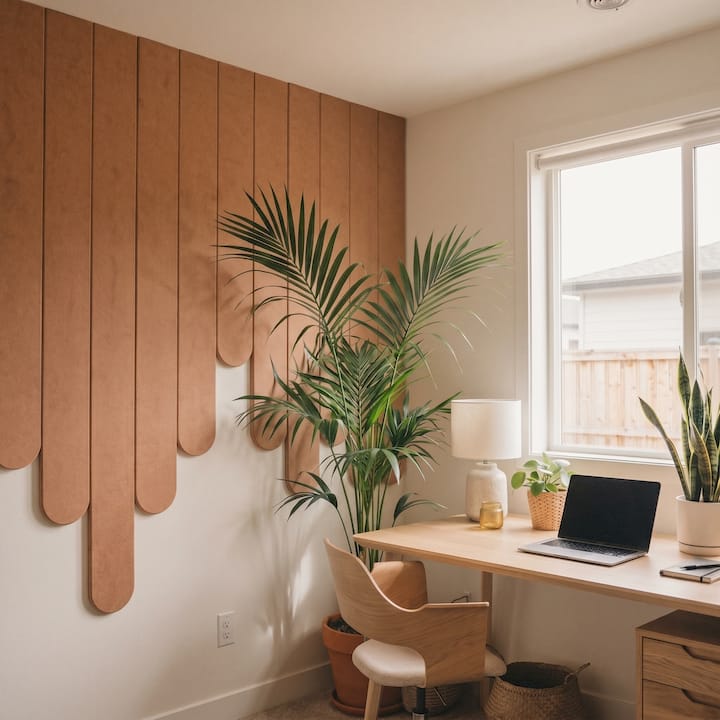
DwellForms™ wall kits are New Zealand-designed and made from precision-cut PET felt produced from 100% recycled plastic, built as modular panels you install with tested adhesive pads rather than screws or nails. That makes them a genuinely renter-friendly feature wall option: no drilling, no painting, and no permanent alteration to a wall you don’t own.
Felt panels work especially well in spots where echo tends to gather and where a bare wall is doing nothing for the room.
- Behind a television, where a plain wall reflects sound straight back into the seating area.
- Flanking a sofa or reading chair, adding soft surface area at ear height.
- Along hallways, where narrow, hard-walled spaces amplify footsteps and voices.
Because the panels use adhesive mounting, the installation guidance for renters is worth a read before you start, along with our notes on protecting your bond when applying any adhesive-mounted decor.
When to consult an acoustic engineer or specify a tested floor build-up
A few signs suggest surface fixes have reached their limit. Persistent low-frequency boom, direct complaints from neighbours below, or body-corporate rules restricting flooring changes are all reasons to escalate. For apartment hard flooring, a designed build-up with field verification is the normal route under NZBC G6, rather than relying on a product’s lab rating alone. The sensible order is to try rugs, pads and curtains first, note what’s improved, then bring that detail to a specialist if the problem persists.
Practical, renter-first sound improvements that also look good
What I like about tackling echo this way is that none of it asks you to compromise on how your home looks or feels. A rug, a heavier curtain, a felt panel in the right spot: these are changes you can make in an afternoon and undo just as easily if they don’t suit you. Start small, listen carefully with each change, and let the room tell you what it still needs. Our guide to hallway echo fixes is a good next stop if narrow spaces are your main concern.
— Michelle
How DwellForms kits fit into an echo-reduction plan
Once your rugs and curtains are doing their job, DwellForms™ panels are a natural next layer, adding both absorptive surface and genuine colour to walls that have been sitting blank for too long.
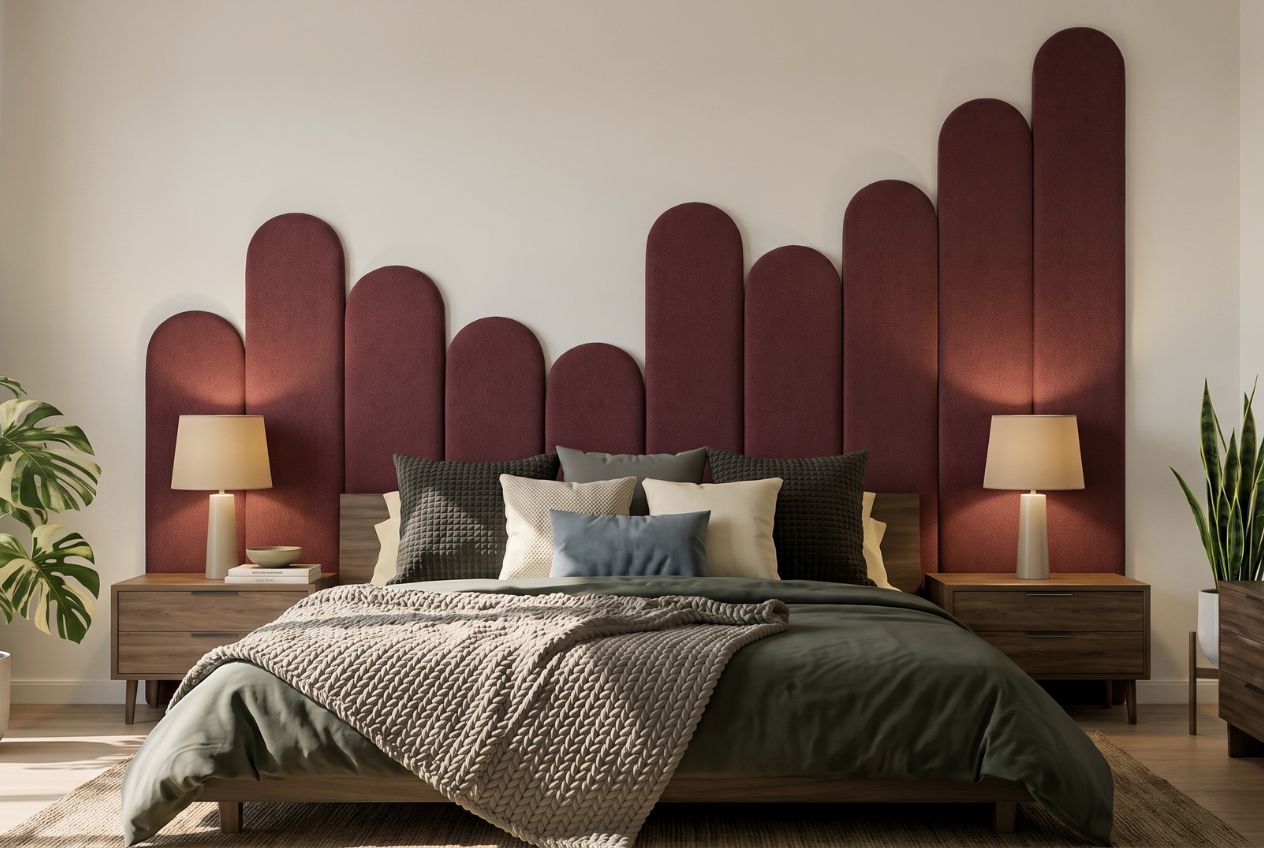
We’d suggest starting with a Colour Samples pack to test shades and texture against your actual wall before committing to a full layout.
- Sample a few colourways first so the final wall feels like a decision, not a guess.
- Move to a Core Kit once you’ve settled on a palette and panel arrangement.
- Run a clap test again after installation to hear the difference the added surface makes.
Browse the DwellForms™ Core Kits range to find a layout that suits your room and start planning your wall.
FAQ
How to reduce sound echo in a hall?
Hallways benefit most from a runner rug with a dense pad, since bare floors in narrow spaces amplify footsteps and voices. Adding a felt wall panel or two along the length of the hall gives you extra absorbing surface without needing to drill into rental walls.
Should you insulate between floors in your house?
Insulating or adding resilient underlay between floors reduces impact noise such as footsteps, with measured reductions ranging from around 14 dB to 35 dB depending on material and floor assembly. The benefit is strongest on concrete floors and more limited on timber-joist structures unless the ceiling below is also treated.
What is the average lifespan of laminate flooring?
Laminate flooring lifespan isn’t covered by the acoustic sources referenced in this guide, so we’d point you to a flooring manufacturer or retailer for a reliable figure specific to the product you’re considering.
How to soundproof floors in apartment?
Apartments with hard flooring typically need underlay or a floating floor system to manage impact noise, and under NZBC G6 this usually falls under an Alternative Solution requiring a designed build-up and field verification. Surface fixes like rugs, pads and curtains help with airborne echo in the meantime but won’t satisfy a formal acoustic rating on their own.
Sources
- NZBC G6: Timber flooring & acoustic underlay in apartments
- IMPACT NOISE REDUCTION: LABORATORY AND FIELD MEASUREMENTS OF DIFFERENT MATERIALS PERFORMANCES
- Reverberation in a small room (RT60 demo and measurements)
Recommended
- 5 No Drill Fixes Renters Can Do To Reduce Living Room Echo
- No Drill Hallway Echo Solutions For New Zealand Renters
- Renters: Cut Kitchen Echo In A Weekend With Removable Felt Panels
- Colour Led PET Felt Bedroom Acoustics For Renters, No Drilling
This article is for general information and inspiration only. Product performance and results may vary depending on individual circumstances, surfaces and installation.