

TL;DR:
- A design-led home prioritizes vision, liveability, and emotional resonance from start to finish.
- It uses layered textures and thoughtful negative space to create warm, inhabited environments.
- In New Zealand, design-led homes emphasize landscape, natural materials, and sustainability.
Most homeowners assume that a truly beautiful home is either highly customised or ruthlessly functional. But that binary misses something essential. A design-led home prioritises design as the guiding force from inception through to construction and interiors, rather than letting budget or build sequence call the shots. It is a philosophy that places vision, liveability, and emotional resonance at the centre of every decision. For New Zealand homeowners seeking interiors that feel genuinely alive, this approach offers something neither a spec build nor a fully bespoke project can reliably deliver: a home that holds the room, and holds you in it.
Table of Contents
- Understanding the design-led home: What sets it apart?
- Key characteristics of design-led interiors
- The New Zealand context: Landscape, materials and sustainability
- Design-led homes vs custom and construction-led: Pros, cons and edge cases
- Why design-led homes matter more now: Our take
- Bring your design-led home to life with Lifted+
- Frequently asked questions
Key Takeaways
| Point | Details |
|---|---|
| Design-led homes defined | A design-led home puts cohesive design and thoughtful planning at the heart of the building and decor process. |
| Personal yet timeless | Layered interiors, rich colours, and statement pieces create vibrant spaces that avoid fleeting trends. |
| New Zealand’s unique edge | Local materials, landscape integration, and sustainability shape design-led homes for Kiwi lifestyles. |
| Smart investment | Design-led homes blend artistic intention with broad appeal, balancing creativity and long-term value. |
Understanding the design-led home: What sets it apart?
The term ‘design-led’ is used loosely in property circles, but its meaning is precise. A design-led home begins with a clear vision of how the space should feel and function, then works outward from there. Architecture, materials, and interior styling are not treated as separate phases bolted together at the end. They are integrated from the very first conversation.
The mechanics involve site analysis, a thorough understanding of how you actually live, and ongoing architect or designer involvement to ensure design intent is preserved through every stage of construction. Nothing is left to chance or contractor interpretation.
This stands in contrast to a construction-led approach, where the build sequence and cost management dominate decisions, often at the expense of spatial quality. Fully custom builds offer freedom, but they carry higher risk, longer timelines, and outcomes that can feel intensely personal to the original owner yet alienating to anyone else.
| Approach | Starting point | Designer role | Timeline | Broad appeal |
|---|---|---|---|---|
| Design-led | Vision and lifestyle | Ongoing, integrated | Predictable | High |
| Construction-led | Budget and structure | Limited | Variable | Moderate |
| Fully custom | Owner’s brief | Central but reactive | Long | Niche |
The core values that distinguish a design-led home are worth naming clearly:
- Intention: Every element earns its place
- Artistry: Aesthetic decisions are made with care, not convention
- Liveability: Beauty and function are never in opposition
- Emotional impact: The space moves you, not just accommodates you
“A design-led home is not about following a style. It is about creating a living environment where every layer, from structure to soft furnishing, serves a coherent and deeply considered whole.”
For those pursuing timeless home design, this integrated philosophy offers a far more reliable path than chasing trends or retrofitting character into a builder-grade shell. Understanding the range of home decor styles available is the natural first step toward identifying which design-led direction suits your life.
Key characteristics of design-led interiors
Once a home is designed from the inside out, the interiors reflect that intentionality in unmistakable ways. The most defining quality is layering. Not layering in the decorating sense of piling things on, but in the architectural sense of building depth through texture, colour, and considered personal pieces.
Design-led interiors use layered, thoughtful approaches that draw on saturated tones, statement furniture, and personal objects to create spaces that feel inhabited rather than staged. Think saturated ochre on a feature wall anchored by a sculptural pendant. Think linen upholstery against marble, or a hand-finished ceramic piece on a raw timber shelf. Each element speaks to the others.
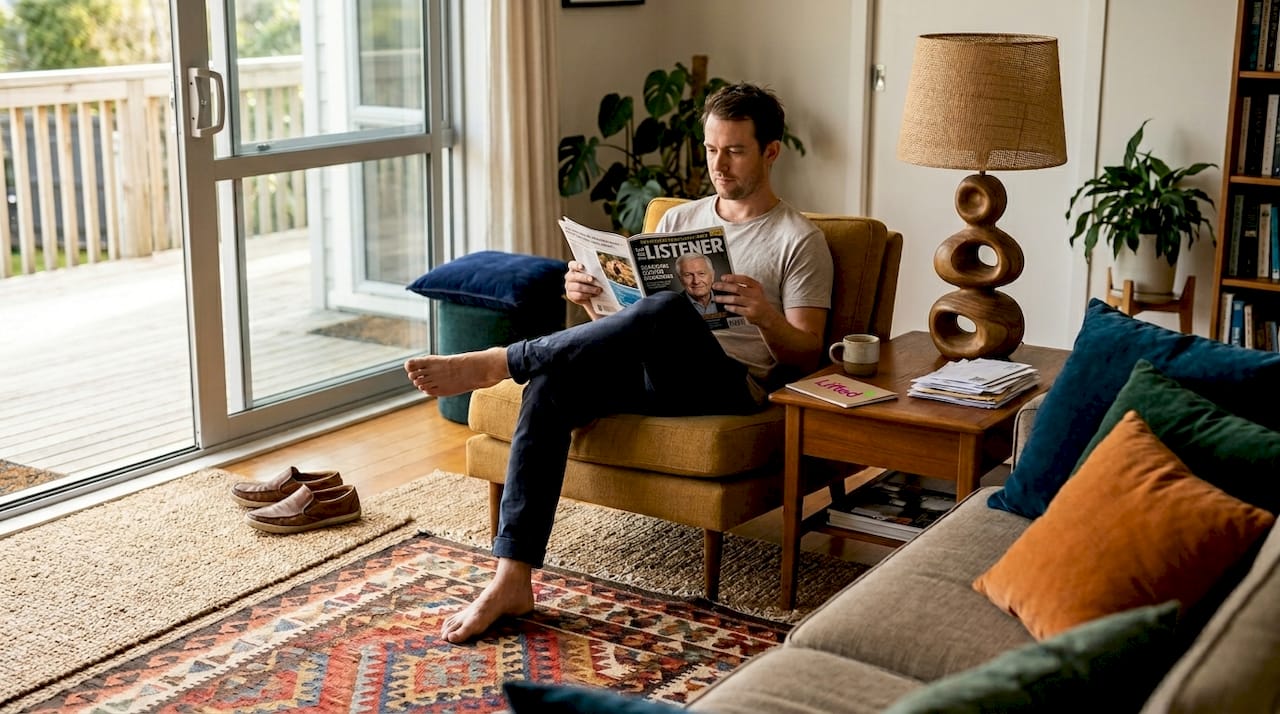
Negative space plays an equally important role. In a design-led interior, emptiness is not absence. It is breath. Restraint is what allows a single statement piece to hold the room rather than compete with everything around it. This balance between richness and calm is what separates a design-led interior from one that simply has a lot of nice things in it.
Essential elements for vibrant, artful spaces include:
- Colour as architecture: Saturated hues used structurally, not decoratively
- Textural contrast: Rough against smooth, matte against gloss
- Statement anchors: One or two pieces that command attention
- Personal objects: Art, ceramics, or inherited pieces that carry meaning
- Considered negative space: Surfaces allowed to breathe
Pro Tip: Avoid rotating your palette with the seasons. Instead, choose a grounded base of two or three colours that feel true to your personality, then introduce seasonal accents through textiles and smaller objects. This is how design-led spaces stay relevant without becoming dated.
Exploring minimalism with colour is one of the most effective ways to practise this kind of restraint without sacrificing warmth. And layering lighting at home is the technique that brings every other layer to life, shaping mood and depth in ways that no amount of furniture alone can achieve.
“The goal is not a perfect room. It is a room that feels like you at your most considered.”
The New Zealand context: Landscape, materials and sustainability
New Zealand gives design-led homes a particular character. The landscape here is not backdrop. It is participant. A well-designed home on the Kāpiti Coast or the Waiheke shoreline does not ignore its surroundings. It responds to them, drawing the outside in through material choices, orientation, and the careful placement of openings.
NZ design-led homes emphasise landscape integration, natural materials, restraint, and sustainability as core principles rather than optional extras. Timber, stone, rammed earth, and recycled materials are chosen not just for their beauty but for their honesty. They age with the house rather than against it.
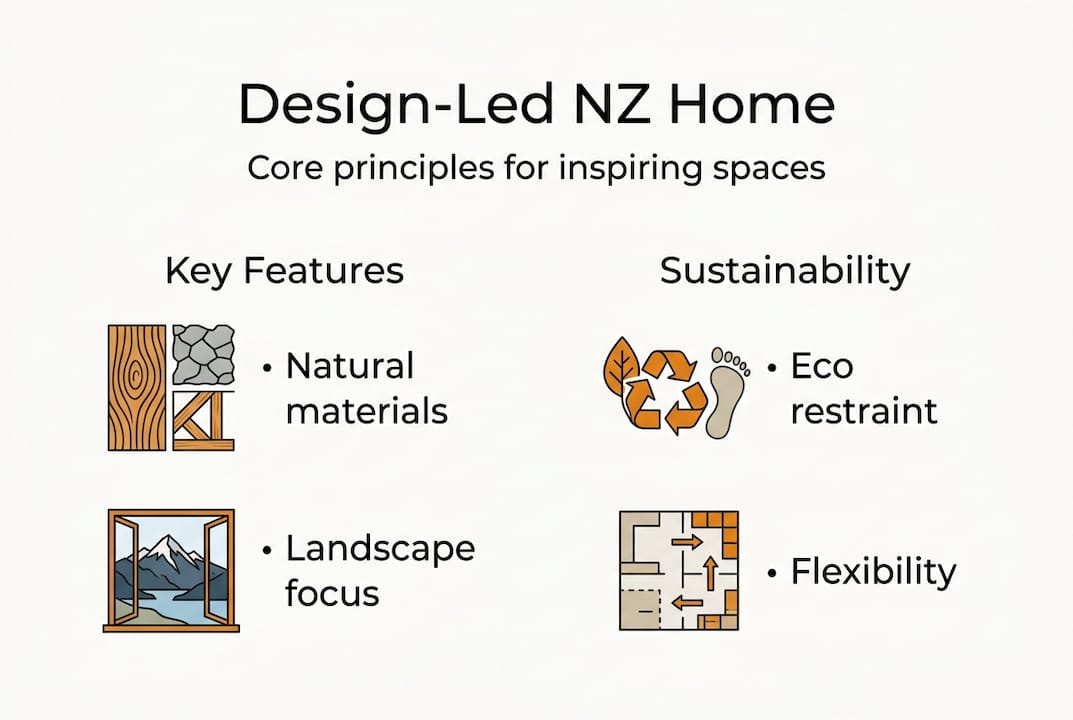
Multi-use flexibility is another defining feature of the New Zealand design-led home. Spaces are planned to function as family living areas by day and quiet retreats by evening. Guest rooms double as studios. Outdoor areas are treated as genuine extensions of the interior rather than afterthoughts.
| Material | Origin | Design impact |
|---|---|---|
| Rimu timber | Native NZ | Warmth, grain depth, heritage |
| Schist stone | Central Otago | Texture, groundedness, permanence |
| Rammed earth | Local clay | Thermal mass, earthy palette |
| Recycled macrocarpa | NZ plantation | Character, sustainability, warmth |
| Linen and wool textiles | NZ and AU | Softness, natural colour, tactility |
Features NZ homeowners tend to prioritise in a design-led approach:
- Indoor/outdoor flow as a structural priority
- Passive solar orientation for warmth and light
- Low-maintenance, high-character natural materials
- Flexible room configurations for changing life stages
- Colour palettes drawn from the surrounding landscape
Sustainability in this context is not a marketing claim. It is a design constraint that sharpens decisions. When you commit to local and low-carbon materials, you automatically narrow your palette toward the honest and the enduring. Projects like Willow Glen illustrate how this restraint produces spaces of remarkable presence. Bringing colour into NZ homes through landscape-inspired palettes is one of the most direct ways to honour this connection.
Design-led homes vs custom and construction-led: Pros, cons and edge cases
Choosing a build philosophy is not purely an aesthetic decision. It has real consequences for your timeline, budget, resale value, and daily experience of the space. Understanding where each approach excels helps you make a choice grounded in your actual circumstances.
Design-led offers cost and time certainty alongside broad market appeal, while custom builds offer greater freedom but carry higher risk and cost. Construction-led approaches prioritise efficiency but often sacrifice the emotional quality that makes a home feel genuinely yours.
| Factor | Design-led | Construction-led | Custom build |
|---|---|---|---|
| Cost certainty | High | High | Low |
| Design quality | High | Moderate | Variable |
| Personalisation | Moderate | Low | Very high |
| Timeline | Predictable | Predictable | Long |
| Resale appeal | Broad | Broad | Niche |
| Emotional resonance | High | Low | High (if done well) |
How to choose the right approach for your needs:
- Assess your flexibility. If you need to move within five years, design-led offers broader resale appeal than a highly personalised custom build.
- Consider your lifestyle complexity. Multi-generational households, home studios, or coastal retreats often benefit most from the integrated thinking of a design-led process.
- Think about future use. A design-led home adapts more gracefully to life changes than one built around a single, very specific brief.
- Weigh emotional priority. If how the space feels matters as much as what it contains, design-led is almost always the stronger choice.
Edge cases worth noting: multi-generational homes benefit enormously from the flexible planning that design-led encourages. Coastal properties with significant views need the site-responsive thinking that design-led architects are trained to provide. Retreat-style homes, where atmosphere is everything, are almost impossible to achieve well through a construction-led process.
Pro Tip: If you are renovating rather than building, apply design-led thinking by starting with how you want the space to feel, then working backward to what needs to change structurally or decoratively to achieve that feeling.
Why design-led homes matter more now: Our take
Here is what most guides on this topic will not tell you. The real advantage of a design-led home is not the quality of the finishes or the coherence of the palette. It is the fact that intentionality compounds over time.
A home built around a clear design vision does not become dated in the way that trend-driven spaces do. It evolves. You add to it, edit it, and layer it as your life changes, and it absorbs those changes without losing its sense of place. That is something no amount of renovation budget can manufacture after the fact.
The myth that design-led means expensive or impersonal is worth dismantling directly. Colour-led styling and layered living frameworks, the kind we explore in our NZ practical styling tips, are accessible at almost any budget. What they require is not money. They require the willingness to make considered choices rather than convenient ones. That shift in approach is, ultimately, what transforms a house into a home that holds you.
Bring your design-led home to life with Lifted+
If this way of thinking about your home resonates, the next step is finding pieces that carry that same intentionality. At Lifted+, we curate statement decor, colourful furniture, and original wall art specifically for homeowners who want their interiors to feel considered, not collected.
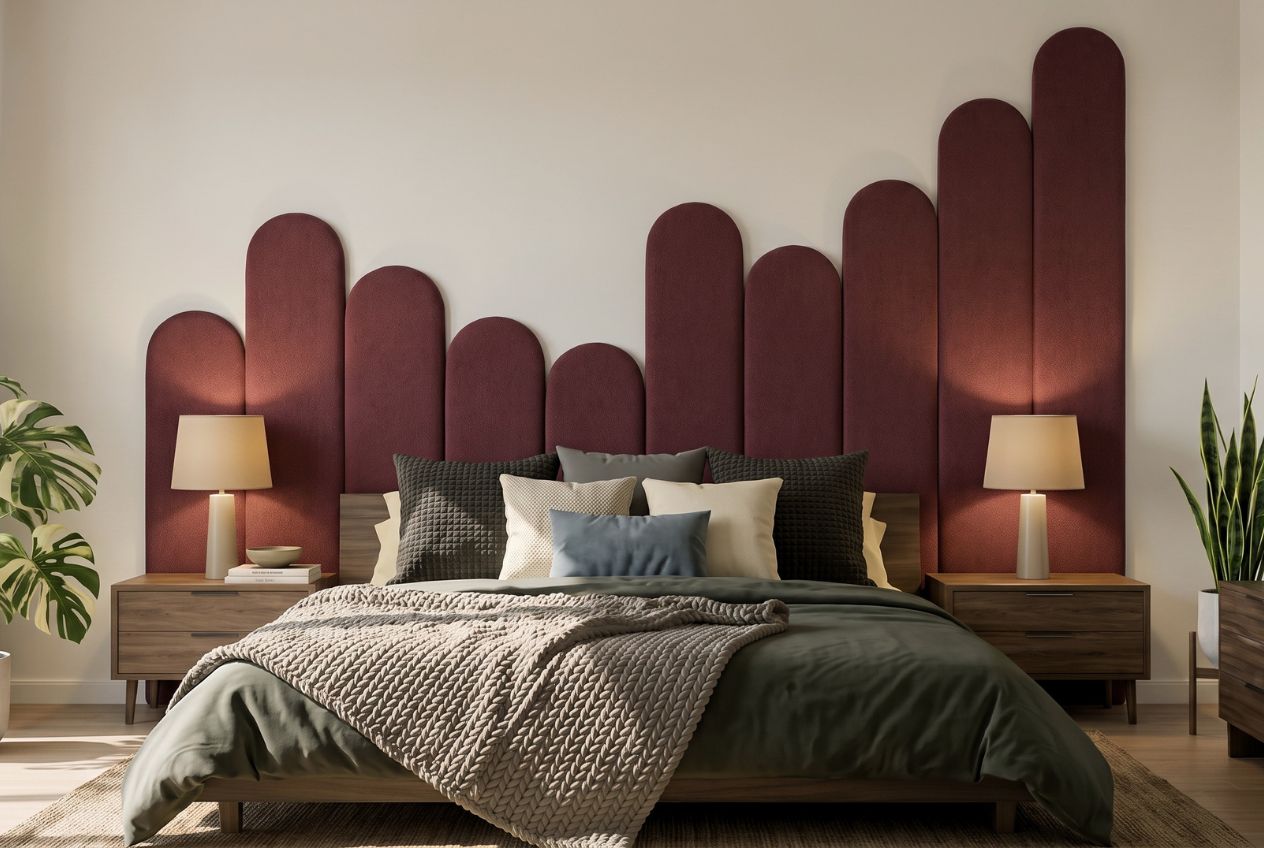
Our mood library is a practical starting point, offering curated visual frameworks that help you identify your colour direction and layering approach before you buy a single thing. From there, exploring our range of colourful furniture and modern wall art gives you the statement anchors that bring a design-led interior to life. Every piece is chosen for form, presence, and lasting relevance.
Frequently asked questions
What are the core elements of a design-led home?
A design-led home uses integrated design thinking, layered textures and colours, and tailored statement pieces to create a cohesive, intentional space where every element serves the whole.
How does design-led differ from custom or construction-led homes?
Design-led homes prioritise overall vision and liveability from the outset, while custom builds centre on personalisation and construction-led approaches focus primarily on cost and structural efficiency.
Are design-led homes more sustainable in New Zealand?
Yes. NZ design-led homes typically use local materials, integrate with the surrounding landscape, and prioritise adaptability and low-carbon choices as foundational design principles.
What is the biggest myth about design-led interiors?
Many assume design-led means following current trends, but the 3T method confirms it is actually about creating tasteful, tailored, and timeless spaces built around the owner’s lifestyle rather than the season’s mood board.