
Last Updated: October 30, 2026
Quick Summary
Eco friendly home decor kits for renters and small spaces centre on modular, non-permanent pieces such as recycled PET felt panels that install with no-drill adhesive pads, so you add colour and texture without paint or landlord permission. Felt panels suit dry rooms like bedrooms and living areas, and can be removed and reused in your next home.
- Five sustainable panel families dominate the market: recycled PET felt, bamboo, reclaimed wood, cork and recycled aluminium.
- Felt panels are the easiest to install, needing no drilling on smooth painted plasterboard, and a single wall takes an afternoon.
- Cork is harvested from living bark roughly every nine years without felling the tree.
- Ask for emissions documentation for both the panel and the adhesive or fixing system before buying.
- Measure the wall, subtract doors and windows, then add a margin for cutting to avoid running short.
Table of Contents
- Why Eco Friendly Home Decor Kits Suit Rented and Small Spaces
- Sustainable Wall Panels: Five Options Compared for Homeowners and Renters
- Recycled PET Felt Panels: What They Are and How They Perform
- Renter-Friendly Wall Decor That Leaves No Marks Behind
- Small Apartment Wall Decor: Making Every Square Metre Count
- Comparing Cost, Lifespan and Indoor Air Quality Across Panel Types
- Common Mistakes When Choosing Eco Friendly Wall Panels
- Choosing Your DwellForms Kit for Your Space
- Frequently Asked Questions
Why Eco Friendly Home Decor Kits Suit Rented and Small Spaces
Renting a small apartment usually means living with blank white walls you are not allowed to touch. These versatile design solutions extend beyond the living room to help parents curate a sustainable environment through thoughtful eco friendly nursery decor that respects both the architecture of a rental and the needs of a growing family.
A renter needs a wall treatment that is reversible, portable and light enough for a small room.
Traditional options fail one of those tests. Paint is permanent. Wallpaper is fiddly and rarely reusable. Timber slat walls need fixing points and a free weekend.
Modular felt panels are designed to be moved and reconfigured, which matters more than any single design choice in a small flat.
Sustainable Wall Panels: Five Options Compared for Homeowners and Renters
Five material families dominate the sustainable wall panels market: recycled PET felt, bamboo, reclaimed wood, cork and recycled aluminium. Each has a different story on sourcing, installation and end of life. Here is how they stack up before we go deeper.
Recycled PET felt, bamboo, reclaimed wood, cork and recycled aluminium at a glance
| Panel type | Sourcing story | Installation | Best for |
|---|---|---|---|
| Recycled PET felt | Made from recycled plastic bottles | No-drill adhesive pads | Renters, small rooms, acoustic softening |
| Bamboo | Fast-growing grass, renewable | Screws or adhesive | Warm modern interiors, low-humidity rooms |
| Reclaimed wood | Salvaged timber, character grain | Screws or battens | Feature walls with history |
| Cork | Harvested bark, regrows | Adhesive or pins | Warmth, sound absorption, light walls |
| Recycled aluminium | Post-industrial scrap metal | Clips or fixings | Commercial spaces, wet areas |
The pattern is clear: softer, lighter materials suit renters and small spaces, while harder materials suit permanent installs where fixing points are allowed.
Lifecycle impact: what each material actually saves
Sustainability claims are easy to make and hard to compare. The useful question is what the material avoids over its service life, not whether it contains recycled content.
- Recycled PET felt diverts plastic bottles from landfill and gives them a second life as an interior finish. The energy to shred and press the fibre is modest compared with virgin plastic, and panels can often be reused in a new room.
- Bamboo is a grass that regrows from the same root system, so replanting burden is lower than for most hardwoods. The trade-off: panels are usually laminated or strand-woven, and the binder and finish matter as much as the raw material.
- Reclaimed wood avoids new logging and keeps structural timber out of the waste stream. Its embodied impact is dominated by transport and re-milling, not by growing the tree.
The lowest upfront-impact materials (felt, cork, reclaimed wood) also suit reversible, renter-friendly installs, while the highest-durability option (aluminium) carries the highest upfront footprint but the longest service life. The right choice depends on how long the panel will stay on the wall.
Installation skill and room suitability
Installation difficulty varies more than the marketing suggests:
- Felt panels are the easiest. Adhesive pads or a low-profile rail need no drilling on smooth painted plasterboard, and a single wall can be arranged in an afternoon. Not suitable for bathrooms, kitchens or anywhere with sustained moisture or direct heat.
- Bamboo panels usually need screws into battens or direct-fix adhesive. They suit living areas and bedrooms but should stay out of steamy rooms unless rated for wet areas.
- Reclaimed wood is the least forgiving. Boards vary in thickness and flatness, so expect to scribe, pack and oil. It rewards patience but is not a quick weekend job for a first-timer.
Total cost and value over time
Pricing depends on quantity, panel size, finish and delivery, so check current figures directly. What you can compare is the shape of the cost over time:
- Felt and cork have a low entry cost and a short-to-medium lifespan in dry rooms, but they are easy to remove and reuse, spreading the cost across more than one home.
- Bamboo and reclaimed wood cost more per square metre once battens, fixings and finishes are included, and reclaimed wood adds labour if you are not doing it yourself.
- Recycled aluminium has the highest upfront cost and the longest service life, so cost per year can be competitive in a permanent commercial install but rarely makes sense for a rental.
The value question is not “which is cheapest” but “which cost per year of use, including removal and reuse, fits how long you will stay put”.
Indoor air quality and material safety
New panels, adhesives and coatings can release volatile organic compounds, with the risk highest in the first weeks after installation. Ask suppliers for emissions documentation for the panel and for the adhesive or fixing system, because a low-emission panel fitted with a high-emission adhesive defeats the purpose. For felt panels specifically, our guide to PET felt safety checks explains what fire and VOC reports to request.
Recycled PET Felt Panels: What They Are and How They Perform
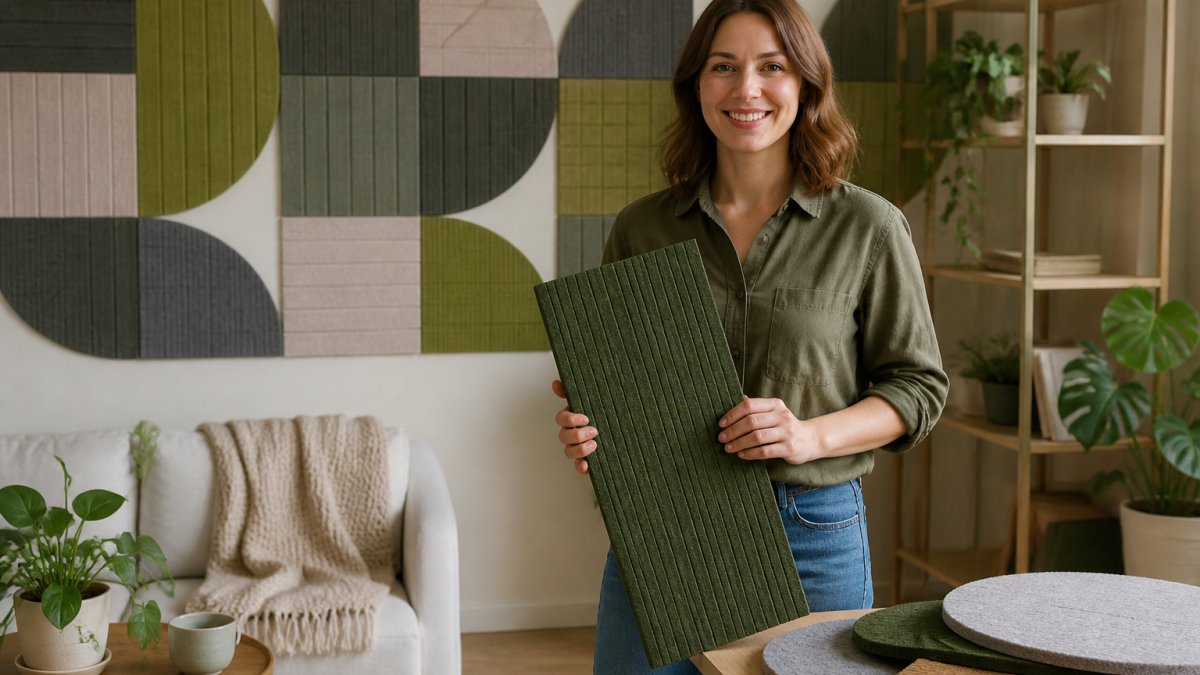
Recycled PET felt panels are wall coverings made from recycled plastic bottles, using 100% recycled PET felt as the material.
If you are weighing up what “recyclable” and “recycled” actually mean for this material, our guide to recyclable wall panels explains the claims to check before you buy.
Watch out: felt panels are not a substitute for structural fixing. Do not hang shelves or heavy frames from them, and keep them away from direct heat sources.
Renter-Friendly Wall Decor That Leaves No Marks Behind
The question every renter asks is whether the panels will damage the wall. Our guide to reusable wall panels explains how removable panels attach, what to check with your landlord, and how to make a feature wall you can take with you.
Small Apartment Wall Decor: Making Every Square Metre Count
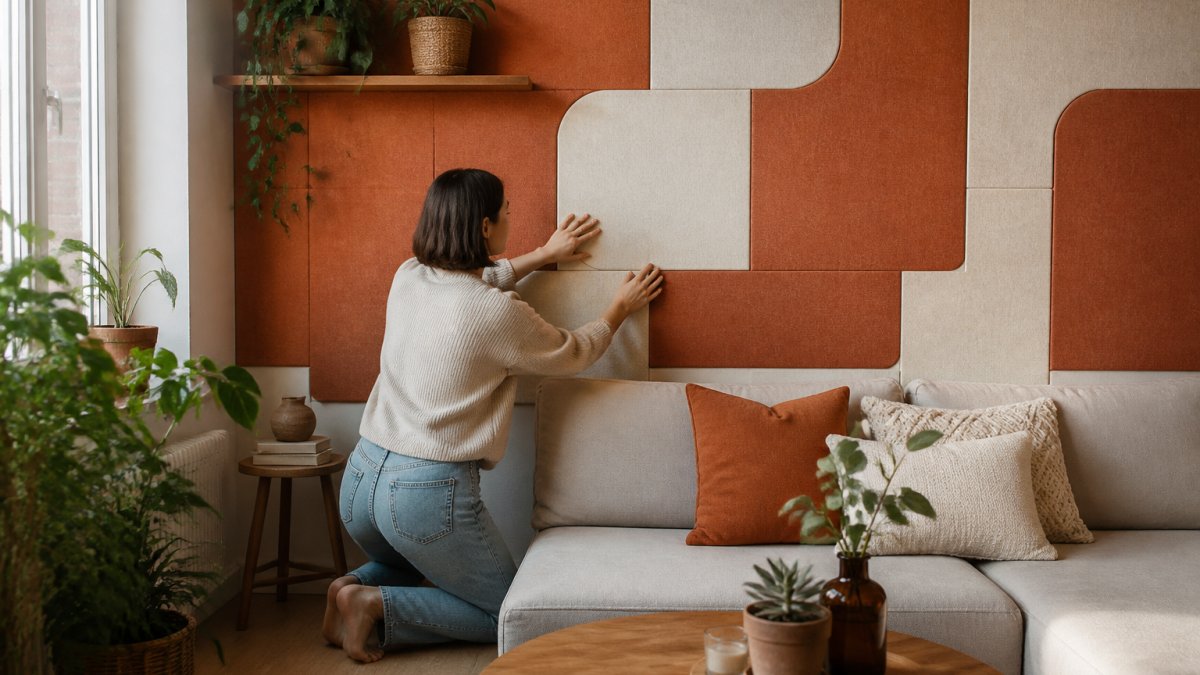
Small apartment wall decor works best when it adds texture and shape rather than clutter. Panels break up a blank wall and add colour, texture and shape without adding furniture.
Three moves that work in tight rooms:
- Run panels floor to ceiling on one wall only, so the room reads taller.
- Use two or three colours in a simple geometric arrangement rather than a busy pattern.
- Keep the rest of the room quiet so the feature wall carries the visual weight.
For broader small-space styling ideas, our apartment decorating guide covers layout, lighting and storage strategies that pair well with a panel feature.
Comparing Cost, Lifespan and Indoor Air Quality Across Panel Types
Cost and lifespan vary widely, and pricing depends on quantity, panel size and delivery, so check current figures directly. What follows is the comparison most roundups skip: how each option behaves over years of ownership.
Lifespan and maintenance by material
- Bamboo panels are dimensionally stable in normal living areas but can swell or cup in sustained humidity. They need no routine finishing beyond a wipe, but are difficult to repair if gouged; replacing a single board is usually the fix.
- Reclaimed wood is the highest-maintenance option. It benefits from occasional oiling to stop it drying and splitting, and its character grain means small marks blend in. A poor choice for steamy rooms.
- Cork is soft and warm but marks and dents more readily than harder materials. It is not repairable in place, though individual tiles can sometimes be swapped.
A useful rule of thumb: the softer and lighter the panel, the shorter its lifespan in a permanent install but the easier it is to remove and reuse. The harder the panel, the longer it lasts but the more committed you are to that wall.
Cost over time, not just at the till
Because kit prices move with panel size and quantity, compare materials on cost per year of use rather than sticker price. Felt and cork have a low entry cost and a shorter dry-room lifespan, but their removability lets renters carry them to a new home, lowering the effective annual cost. Bamboo and reclaimed wood cost more once battens, fixings and finishes are added, and reclaimed wood adds labour if you are not installing it yourself.
Indoor air quality: what to ask before you buy
Indoor air quality is the factor most buyers overlook. New panels, adhesives and finishes can release volatile organic compounds, with the risk highest in the first weeks after installation. The practical steps:
- Ask for emissions documentation for the panel and, separately, for the adhesive or fixing system. A low-emission panel fitted with a high-emission adhesive defeats the purpose.
- Prefer mechanical fixings or low-emission adhesives in small, poorly ventilated rooms.
- Air the room well for the first few days after installation and avoid sealing a newly installed wall behind furniture.
Moisture and room-by-room suitability
Moisture is the deciding factor for most rooms. Felt and cork belong in bedrooms, living areas and studies where humidity stays low. Bamboo is fine in living areas but should stay out of steamy rooms unless specifically rated. Reclaimed wood is best on a feature wall away from moisture. Recycled aluminium is the only one of the five that comfortably handles bathrooms, kitchens and other wet areas, which is why it commands a premium.
Common Mistakes When Choosing Eco Friendly Wall Panels
The biggest mistake is buying on looks alone.
Second, people overestimate coverage. Measure the wall, subtract doors and windows, then add a margin for cutting.
Third, renters skip the test patch. One pad on a hidden corner tells you more than any product page.
Finally, do not assume “eco friendly” means fully circular. Ask what happens at end of life, and whether the panels can be reused or returned.
Choosing Your DwellForms Kit for Your Space
Start with the wall, not the colour. Measure the widest uninterrupted stretch, note where power points and light switches sit, and decide whether you want a full-height feature or a smaller arrangement.
Then think about how you live. If you move often, choose a layout you can break into smaller configurations for a differently shaped room.
You can browse the DwellForms Core Kits to see the panel options and pick a starting point for your space.
Frequently Asked Questions
What materials are used in eco friendly home decor kits?
Most kits rely on recycled or renewable materials: recycled PET felt made from plastic bottles, FSC-certified wood, bamboo, cork or reclaimed timber. Lifted Plus DwellForms kits use 100% recycled PET felt, which gives a dense, soft surface that absorbs sound and holds colour well. Check the recycled content percentage and sourcing certification before buying, because a kit labelled eco friendly may still contain virgin plastic fixings or solvent-based adhesives.
Are recycled PET felt panels suitable for renters?
Yes, when they are designed for non-permanent fixing. Lifted Plus DwellForms panels need no paint or drilling and are designed to be moved and reconfigured. Before installing anything, read your tenancy agreement and check the fixings against your wall type.
Can modular wall panels be moved and reused in a new home?
Modular systems are built to be reconfigured. Because the panels are separate pieces rather than one glued sheet, you can rearrange them into a different layout when you move to a smaller or oddly shaped room.
How do I choose wall panels that are easy to remove without damage?
Look for a system that states its fixing method clearly and avoids wet adhesives on painted surfaces. Test one panel in a corner for a week, then remove it and check for paint lift or residue. Lifted Plus DwellForms kits are designed for no-drill installation, which suits renters.
Blank walls and strict leases should not stop you from making a space feel like yours. Lifted Plus designs DwellForms™ kits for exactly that tension: 100% recycled PET felt panels, no-drill installation, and a modular system made to move and reconfigure as your rooms change. Get started with Lifted Plus and turn your blankest wall into the best part of the room.

