

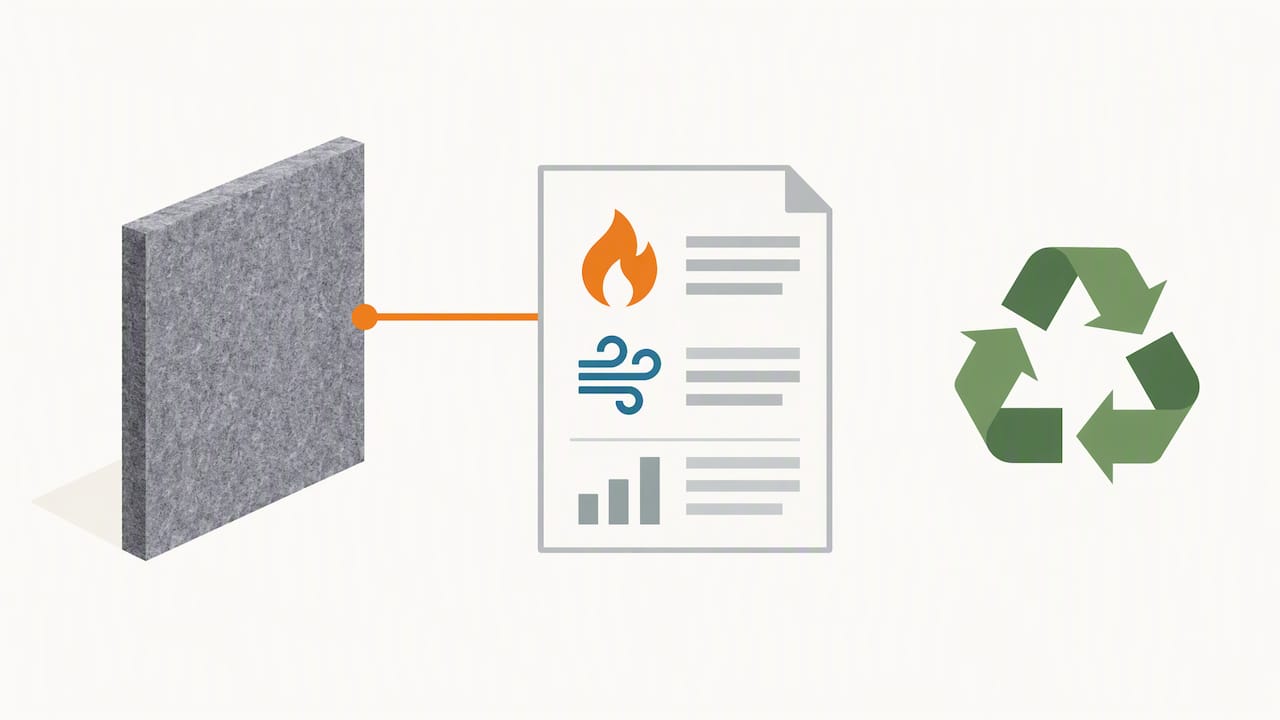
PET felt panels are generally safe for decorative indoor walls when the specific product carries the right fire and VOC test evidence and is installed as the maker recommends. Check two things first: a fire Group Number based on ISO 9705, and independent VOC results. Our DwellForms™ kits are recycled PET felt panels that use tested, no-drill adhesive pads.
Key Takeaways
PET felt panels are safe for indoor decorative use when they meet fire and VOC testing standards, with proper installation practices ensuring safety and wall preservation.
| Point | Details |
|---|---|
| Check fire safety standards | Verify the product’s Group Number and smoke rating through independent testing reports before purchase. |
| Assess VOC emissions | Request VOC test results in µg/m3, confirm the testing method and that panels are properly ventilated before installation. |
| Use proper installation methods | Apply tested adhesive pads carefully and test a small area first to avoid wall damage and protect your rental bond. |
| Recognize acoustic and eco benefits | Recycled PET felt panels absorb sound modestly and offer environmental advantages due to recycled content. |
| Lifted+ recommendations | We recommend DwellForms™ as a renter-friendly, removable PET felt wall system with no-drill adhesive installation. |
Table of Contents
- How do fire tests and Group Numbers apply to PET felt?
- What does research say about VOCs and indoor air quality?
- How do installation choices affect safety and your rental bond?
- Do PET felt panels offer acoustic and sustainability benefits?
- Is PET felt the right choice for your rental or home?
- Who is behind this advice, and how can you request test documents?
- Why fire paperwork matters more than the felt itself
- Why we think DwellForms™ is a smart, renter-friendly place to start
- FAQ
- Sources
How do fire tests and Group Numbers apply to PET felt?
Fire safety is the first check, and it comes down to paperwork you can ask for. The New Zealand Building Code rates internal surface finishes with a Group Number, a figure that summarises how a material behaves in a full-scale room fire test under ISO 9705. The lower the number, the slower the material helps a fire spread across a room.
The “S” suffix matters just as much in a lounge or bedroom. It signals that smoke growth stays within set limits, and smoke is what you breathe long before flames reach you. The same guidance confirms that Australian and European test classifications can be correlated to New Zealand Group Numbers, so an overseas test report is still useful when you compare products.
Group Numbers are numeric representations of ISO 9705 performance, with the S suffix marking limits on smoke growth, and overseas classifications can be mapped across for compliance. That mapping is spelled out in the official commentary, which also shows how full-scale room tests underpin the numbers.
Before you buy any PET felt panel, ask for:
- The manufacturer’s ISO, AS or EN test report, or a written Group Number statement for that exact product
- The smoke rating, so you know whether the S suffix applies
- Written confirmation of the intended use, since a small decorative feature wall is treated differently from a full ceiling or wall lining
- A copy of the datasheet to keep with your records
Small decorative panels are often assessed differently from full-lining materials, which is why the paperwork matters more than the label on the box. Spaces with higher fire risk, such as shared corridors or public areas, call for certified full-lining products and a conversation with your building authority. Building Performance’s guidance on fire spread is a good place to start.
What does research say about VOCs and indoor air quality?
Air quality is the second check, and the evidence for recycled PET felt is encouraging. A 2024 MDPI study on recycled PET felt acoustic panels reported positive biocompatibility testing, antifungal resistance and low VOC emissions, under that study’s own test conditions. Separate research on recycled PET filaments also points to lower VOC emissions than some alternatives.
VOC emissions of less than 2–3 µg/m3 after 28 days were reported for recycled PET felt panels in that MDPI study. Treat it as a benchmark for the questions you put to a supplier, not as a promise about every product on the market.
When you ask for test data, look for:
- The VOC result in µg/m3 and the test method used
- The date of the test and the sample it was run on
- Any biocompatibility or antifungal testing, if the maker has it
- Confirmation that the tested material matches the product you are buying
Bedrooms and small flats deserve the most care, because less air volume means any emissions are more concentrated. Asking for the numbers is a reasonable request, and a confident maker will have them ready.
Pro Tip: Unpack panels a day or two before installing, leave them somewhere ventilated, and use a soft brush or a low-suction vacuum to lift dust from the surface.
How do installation choices affect safety and your rental bond?
Safety does not end at the material. How a panel is attached decides whether it stays put, whether your wall survives, and whether your bond is protected. Specifying and fixing internal linings takes skill, and the good practice guidance is clear that fixings and support affect performance.
Our approach is deliberately different from standard panel fitting. We do not ask you to screw, batten or nail anything. We use tested nano-adhesive pads, chosen after we trialled several systems and deliberately set aside one popular pull-tab brand because the pads we selected performed significantly better in our own testing at minimising wall damage. No adhesive is completely damage-proof, so a little preparation goes a long way.
- Check the wall finish: smooth, clean, well-bonded paint is the best surface.
- Test a small, hidden patch first and leave it for a day.
- Photograph the wall before you start, for your own records.
- Stay within the weight and attachment limits in the instructions.
- Keep the packaging and instructions for removal day.
- When you move out, release the pads slowly using the maker’s method, then touch up any minor marks.
Skip adhesives on crumbly plaster, flaking paint or damp walls. In those cases, seek professional advice. Our guide on protecting walls behind furniture without drilling covers more renter scenarios.
Pro Tip: Press each pad firmly for the time stated in the instructions, then wait before hanging anything near the panels.
Do PET felt panels offer acoustic and sustainability benefits?
Safety is only half the decision, so it helps to see what you gain. Research on recycled PET felt reports promising sound absorption, and also notes limits in sound insulation. In plain terms, panels can soften echo and make a room feel calmer, but they will not block noise from next door. We never present our panels as soundproofing or commercial acoustic treatment.
Recycled PET felt shows useful sound absorption but limited sound insulation, and its properties should be checked for each specific application.
Where panels help most:
- Behind the TV, where hard walls bounce dialogue around
- Beside a home office desk, to take the sharp edge off video calls
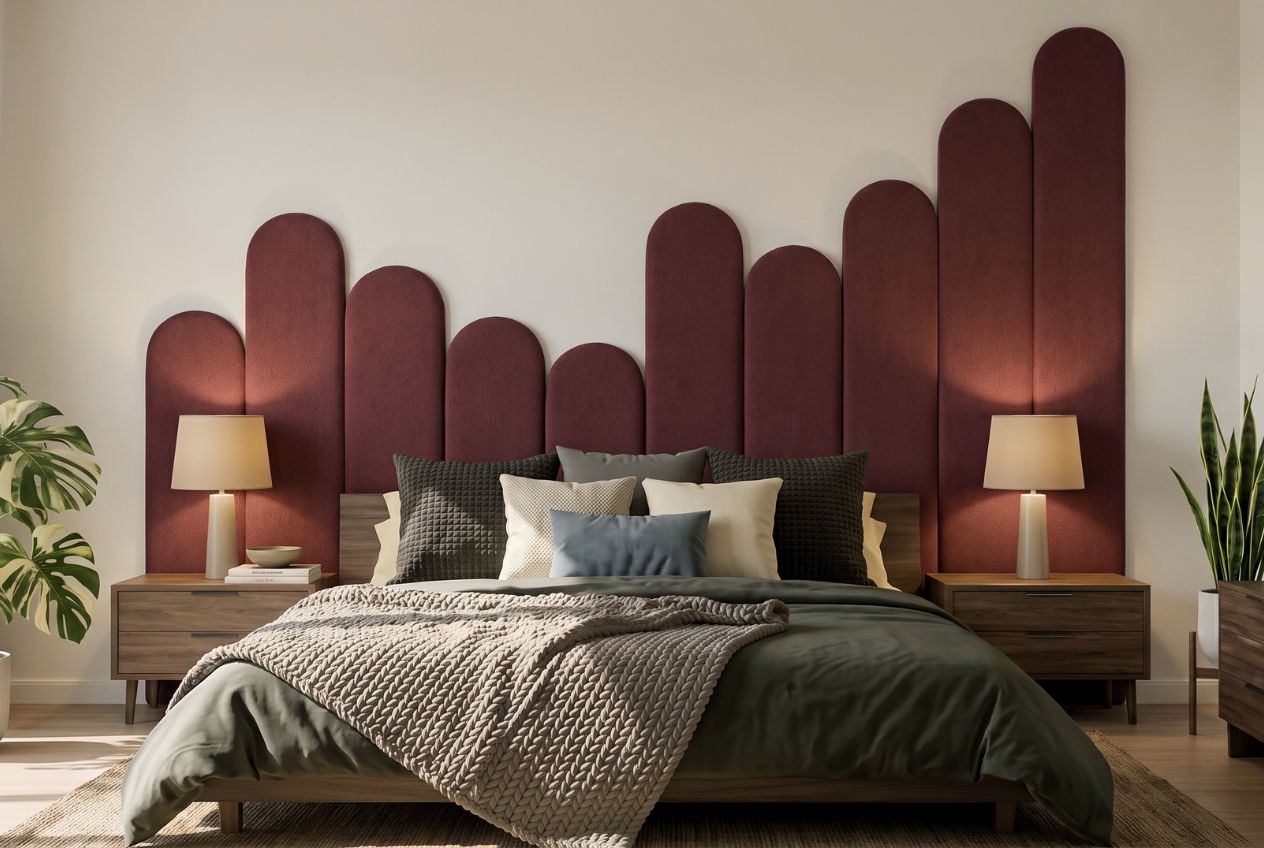
- On a bedroom headwall, for a quieter, softer feel
- Across a bare feature wall in an open-plan living area
On the environmental side, recycled content is the headline: our panels are made from recycled PET, and the same research highlights the advantages of recycled material over virgin fabric. If you like natural alternatives, bamboo wall design ideas offer another eco-minded route. For deeper reading, see our explainer on PET felt panels and acoustic design.
Is PET felt the right choice for your rental or home?
Run through a short checklist before you commit:
- Confirm the Group Number and VOC test evidence, and request the datasheet
- Order a sample and look at it in your own light
- Think about the room: bedrooms deserve the closest look at air quality results
- Check your wall condition and your landlord’s rules
- Photograph the wall before installation
For a decorative, small-area feature wall, a properly tested product is usually a sensible choice. If your space needs certified full lining, follow the building regulations instead. When in doubt, contact the manufacturer and ask for certificates in writing. Our removable wall panel ideas can help you picture the result.
Who is behind this advice, and how can you request test documents?
This guide shares information from Lifted+. DwellForms™ is a New Zealand-designed wall system made from precision-cut recycled PET felt, created for renters, apartment dwellers and homeowners who want colour and texture without renovation.
We publish installation guides and a PET felt explainer, and we offer colour samples so you can judge a panel before you commit. Whoever you buy from, ask for the Group Number and VOC reports first, and keep your purchase and installation details together for your bond.
Why fire paperwork matters more than the felt itself
My view is that most people worry about the wrong thing. The question is rarely whether PET felt is “safe” in general. It is whether this panel, from this maker, has evidence behind it. A material can be recycled, soft and beautifully coloured and still arrive without a single test report.
The research supports cautious confidence: low VOC results and good biocompatibility have been reported for recycled PET felt, and a Group Number gives you a common language for fire performance. What it does not support is skipping the homework. Conventional advice stops at “choose eco-friendly”, which tells you nothing about smoke or emissions.
If you do one thing, ask for the documents before you fall in love with a colour. Then think about installation, because a safe material fixed badly to a fragile wall still costs you your bond.
— Michelle
Why we think DwellForms™ is a smart, renter-friendly place to start
DwellForms™ is a renter-friendly feature wall system that gives you colour without commitment.
- Recycled PET felt panels, with a removable design that suits rented walls
- No-drill installation using our tested adhesive pads
- Colour samples so you can check shade and texture first
Begin with DwellForms™ Colour Samples, move to a Core Kit, then grow your wall with Extension Kits. Order your samples today and check the product information available on our site.
FAQ
Is PET felt safe to have in a bedroom?
PET felt is generally considered suitable for bedrooms when the product has independent VOC and fire test evidence. Ask the maker for the test method and date, and let new panels air out before installing them.
What Group Number should PET felt wall panels have?
The right Group Number depends on where and how the panels are used, so check the requirement for your space. Ask for the manufacturer’s test report or a written Group Number statement, including the smoke (S) rating where relevant.
Does PET felt release harmful chemicals indoors?
Research on recycled PET felt panels reports low VOC emissions under the study’s test conditions. Results vary by product, so request the specific VOC data and unpack panels somewhere ventilated first.
Will no-drill PET felt panels damage my walls?
Damage depends on your wall surface, the adhesive and how carefully you remove the panels. No adhesive is completely damage-proof, so test a hidden patch first and follow the removal instructions slowly.
Sources
- Surface finishes | Building Performance
- Eco-Friendly and Biocompatible Material to Reduce Noise Pollution and Improve Acoustic Comfort in Healthcare Environments
- Evaluating Recycled PET Filaments As A Sustainable Sound Absorbing Material For Building Retrofitting
Recommended
- Protect Your Bond: 6 Steps For NZ Renters To Use No Drill Panels
- Save Your Bond: NZ Renters Protect Walls Behind Furniture, No Drill
- PET Felt Explained: Material, Acoustics And Design Uses
- Rental Friendly Decor NZ: 10 Ideas That Work
This article is for general information and inspiration only. Product performance and results may vary depending on individual circumstances, surfaces and installation.
