
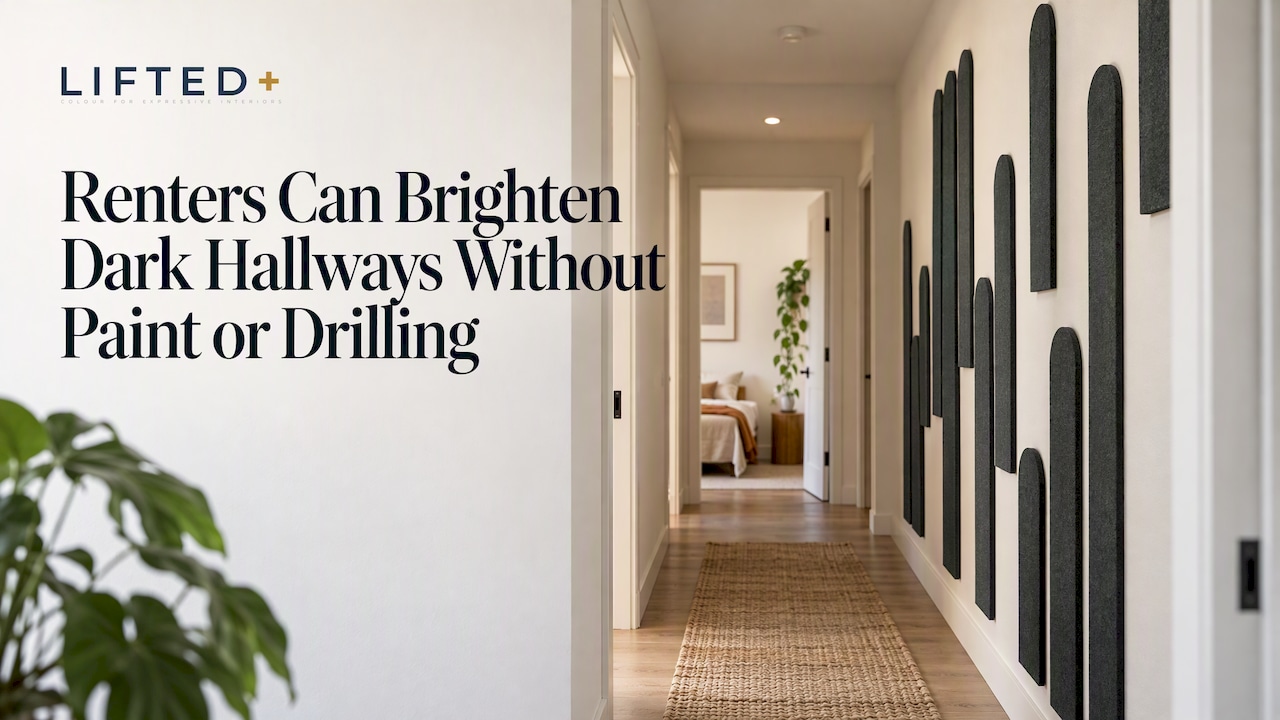
Layered lighting, well-placed mirrors and light-reflective surfaces are the fastest way to brighten a hallway without paint. Each one works on the same problem: a narrow space that traps shadow. Renter-friendly options help too, including our no-drill DwellForms™ panels, which add colour. Below you’ll find quick wins first, then a sample-to-kit path.
Key Takeaways
Layered lighting, reflective surfaces, mirrors, and removable decor are the most effective ways to brighten narrow hallways without paint.
| Point | Details |
|---|---|
| Layer lighting effectively | Use ambient, task, and accent lights together to eliminate shadows and evenly brighten the space. |
| Position mirrors strategically | Hang mirrors opposite lit surfaces or to bounce light onto light-colored walls for a brighter effect. |
| Choose suitable bulbs and fixtures | Select LED bulbs in warm white with high lumens, dimmable options, and check enclosure ratings for longevity. |
| Use light-reflective surfaces and textiles | Opt for light-colored, satin or low-gloss finishes on floors, walls, and textiles to increase reflected light. |
| Implement modular, removable decor solutions | Liftedplus DwellForms™ panels add color and texture without damaging walls, ideal for renters. |
Table of Contents
- How do you layer lighting to remove hallway shadows?
- Where should you hang mirrors so they actually add brightness?
- Which bulbs and fixtures suit a hallway?
- Which surfaces and textiles make a hallway feel brighter?
- What quick layout fixes lighten a narrow hallway?
- Can plants and natural elements brighten a hallway?
- How do decorative accessories reflect light and add interest?
- Why do modular design solutions suit renters and homeowners?
- How do you choose sustainable materials for hallway decor?
- Why a colour-first, removable approach works
- How DwellForms™ help brighten hallways without paint
- FAQ
- Sources
How do you layer lighting to remove hallway shadows?
A single ceiling light in a narrow corridor throws shadow into every corner. Layering helps by combining different kinds of light that overlap. Ambient light covers the whole hallway, task light sits where you actually need to see (doorways, a console, the front door), and accent light draws the eye to art or an architectural feature. Lighting design practice pairs minimum ambient levels with task lighting as needed, which is exactly the logic you can borrow at home.
Editorial guides to dark hallways keep landing on the same advice: layers of lighting, mirrors and a clear floor. We’ve written more on the approach in our guide to layering lighting at home and on layered lighting for ambience, including dimmer and sensor use.
- Recessed downlights, spaced evenly, give the most even ambient wash.
- Wall sconces graze the walls and soften the side shadows that downlights leave behind.
- Plug-in wall lights or a slim table lamp suit landings and thresholds where hardwiring isn’t an option.
- Skip the lone central pendant in a narrow hall: it lights the middle and abandons the edges.
Think about control as well as fixtures. A dimmer lets you drop the level in the evening, and a motion sensor means the hallway lights only when someone walks through, so you’re not leaving a bright bulb burning all day.
Pro Tip: Hang sconces at roughly eye level or just above so the light washes up and down the wall instead of glaring into your face as you walk past.
Where should you hang mirrors so they actually add brightness?
A mirror is a light redirector, not a light source. Hang one opposite a dark wall and all it does is double the darkness. Hang it where it catches an illuminated, light-coloured surface, and the whole corridor lifts.
The technique that works best is the secondary bounce. Instead of aiming a mirror straight at a window or lamp, which risks glare, angle it so it throws light onto a plain, pale wall. That wall becomes a soft second source, and the glow feels gentle rather than sharp.
- Choose shallow, wall-mounted, frameless or narrow vertical mirrors for tight passages.
- Skip large leaning mirrors: they eat into clear walkway width and can create a pinch point.
- Check frame depth before you buy, since a deep frame protrudes further than you’d expect.
In a rental, the sensible route is a small, lightweight mirror hung with a removable adhesive method, tested first on a low-traffic spot. Heavy fixings and big mirrors are a poor match for a landlord’s rules. If you’re after something that doubles as decor, our mirror and wall art range is worth a look.
Pro Tip: Stand where you’ll normally walk, then ask what the mirror can see. If the answer is a pale lit wall or a lamp’s glow, you’ve found the spot.
Which bulbs and fixtures suit a hallway?
Brightness is measured in lumens, not watts. LED packaging lists light output in lumens, usually alongside an old-style incandescent equivalent, so you can compare bulbs honestly. LEDs also cope well with frequent switching, which suits a hallway where lights flick on and off all day.
Warm white is typically more comfortable in homes, while cool white earns its place where contrast matters. That is the EECA guidance, and it translates neatly: warm white for the hallway most of us walk through at night, a cooler tone only if you read or work near the space.
- Check the pack for lumens first, then colour temperature.
- Look for dimmable LEDs if you want control over the mood.
- Confirm the bulb is rated for enclosed fittings. Trapped heat can shorten an LED’s life, so choose a ventilated fixture or an enclosed-rated bulb.
- Pair dimmable bulbs with a motion sensor to help manage energy use and avoid an overbright corridor at night.
Which surfaces and textiles make a hallway feel brighter?
Paint is off the table, but surfaces still do plenty of work. Light-coloured finishes on ceilings, walls and floors maximise reflected light, and diffusing fittings cut glare. You can’t repaint a rental ceiling, though you can change what sits underneath and beside you.
- Swap a dark runner for a light one with a bright ground and a subtle pattern.
- Prefer low-gloss or satin floor finishes: they bounce light without the harsh glare of high gloss.
- Replace dark mats and heavy textiles with lighter, softer options, and keep furniture slim so it doesn’t block light.
- Add removable wall pieces such as mirrors, art and modular panels to break up a flat, flat-feeling wall.
DwellForms™ panels belong in that last group. Our modular PET felt kits add colour and sculptural texture without drilling or painting. If you’re weighing options, our guide to decorating without painting walls covers the wider set of removable ideas.
What quick layout fixes lighten a narrow hallway?
Some of the biggest gains cost nothing. Start by clearing what’s blocking light and sightlines, then work through these steps in order.
- Remove bulky storage and swap benches for a slim console or wall hooks, which cast far less shadow.
- Scale art and mirrors to the wall, and keep the visual centreline clear so the corridor reads as deeper.
- Borrow light by leaving internal doors open and keeping thresholds free of obstructions. Translucent door film or internal glazing can help too, though structural limits apply in a rental.
- Swap a dark runner for a light one.
- Add a plug-in lamp at a console, or a plug-in or battery wall sconce where hardwiring isn’t permitted.
Our bright room ideas cover more quick interventions that lift a space without a paintbrush.
Can plants and natural elements brighten a hallway?
Plants won’t light a windowless corridor, but they do change how it feels. Greenery adds life and a fresh, living colour that pale walls alone can’t supply. The trick is choosing plants that cope with low light and placing them where they don’t crowd the walkway.
Hardy, shade-tolerant varieties such as a snake plant or a ZZ plant suit dim spots. Keep them on a slim shelf, a wall-hung planter or the end of a console instead of the floor, so the path stays clear and the foliage sits at eye level where you notice it. Trailing plants in a wall planter soften a hard edge and draw the eye upward, which makes the ceiling feel higher.
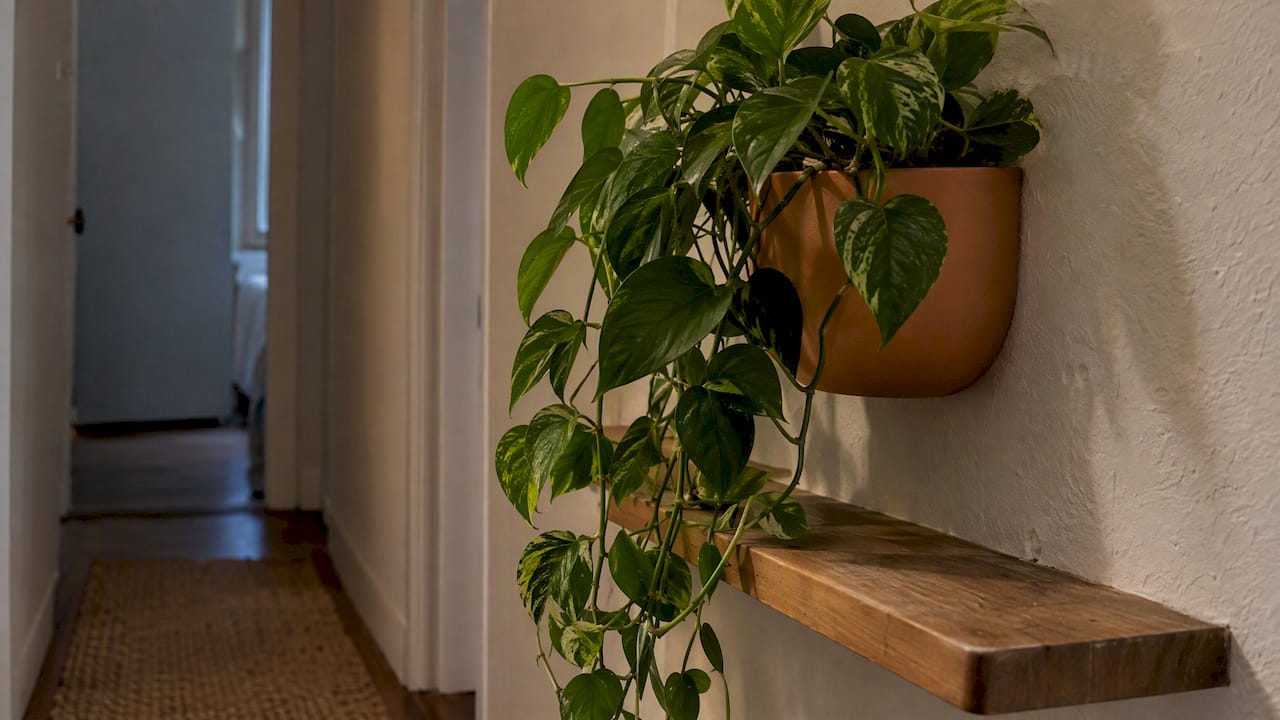
Pair plants with reflective partners. A mirror behind a leafy shelf doubles the greenery and bounces light back along the hall. Natural textures matter too: a woven basket, a timber tray or a linen runner brings warmth and breaks up the flat, institutional look that dark hallways often have.
One practical caution: a plant in a truly windowless hall will struggle without light. If there’s no natural light at all, rotate plants through a brighter room every week or two, or choose a good-quality preserved or artificial option and treat it as decor rather than a living feature. Either way, keep foliage and pots off the floor edge so nobody trips in the dark.
How do decorative accessories reflect light and add interest?
Accessories are the small decisions that finish a hallway, and the right ones work double duty by bouncing light around. Think of them as tiny reflectors: a brass or ceramic bowl on a console, a glass vase, a metallic frame edge, a mirror-backed shelf. Placed near a lamp or sconce, each catches a little glow and passes it along.
Placement does the rest. Group items in odd numbers at different heights so the eye travels along the wall instead of stopping at one spot. Keep the centre of the walkway clear and cluster accessories at the console, the landing and the door. Resist the urge to line the whole corridor with objects, which makes a narrow space feel tighter and casts more shadow.
Choose finishes with care. Soft metallics, satin ceramics and clear glass scatter light kindly, while highly glossy pieces can throw glare into your eyes as you pass. Pale, matte objects reflect without dazzle, and a single bold colour accent gives the eye somewhere to rest.
Art belongs in this mix. A vivid piece hung at eye level adds colour where paint isn’t allowed, and a light-toned frame keeps the wall airy. Our wall art range and our thoughts on how accessories transform a modern room cover the styling side. For small spaces in particular, this partner article on tiny home decorating offers art and finish ideas that help a compact hallway feel continuous rather than chopped up.
Why do modular design solutions suit renters and homeowners?
Modular means you build the look in pieces and change your mind later. That matters in a hallway, where you may not be allowed to paint, drill or wallpaper, and where a bold permanent choice can feel risky. A modular wall system lets you test colour and texture, then rearrange or remove it without a renovation.
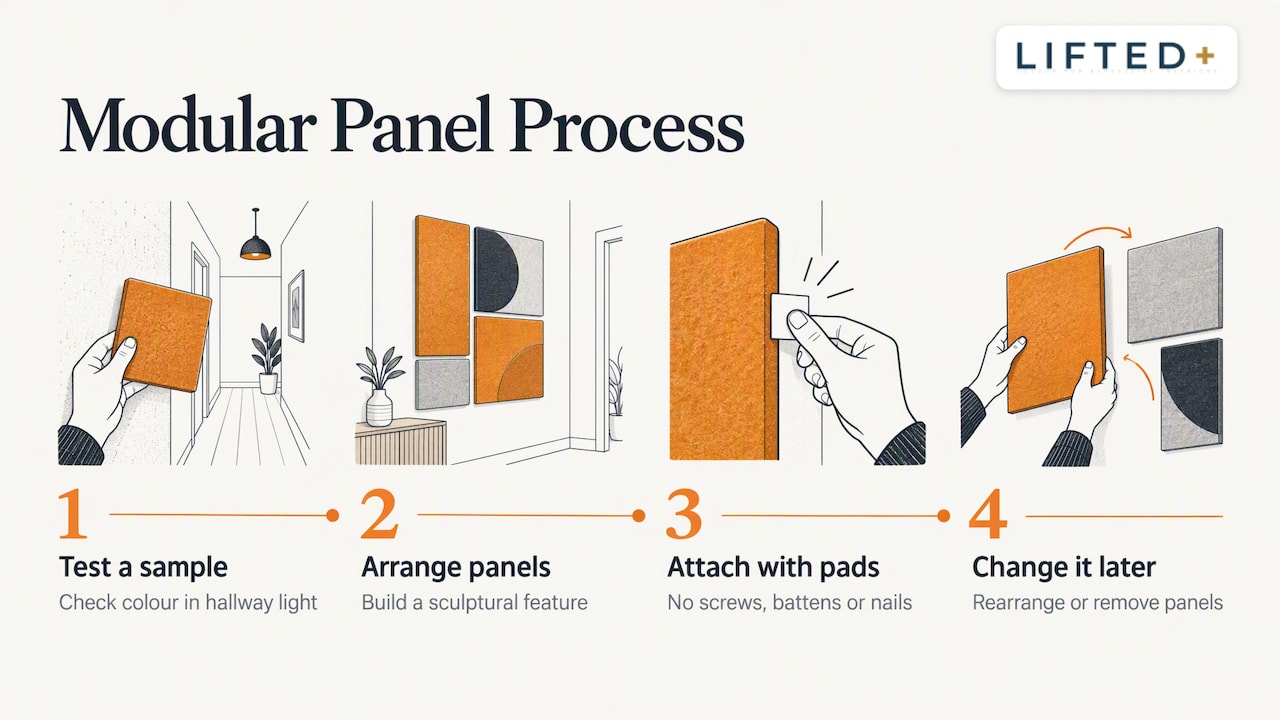
DwellForms™ is built around that idea. Our precision-cut PET felt panels come in kits you arrange into a sculptural feature, fixed with tested adhesive pads rather than screws, battens or nails. You get colour without commitment and texture without renovation. We tested multiple adhesive options and deliberately discounted one popular pull-tab brand, because our selected nano-adhesive pads performed significantly better in our own testing at minimising damage to walls. No adhesive is completely damage-proof, so we suggest checking your tenancy terms and trying a small area first.
Homeowners benefit too. A modular feature can sit behind a console, run as a vertical stripe, or frame a doorway, and it moves with you when you do. The panels’ dimensional surface keeps a hallway interesting at every hour.
Start small. Our colour samples let you hold a colour against your own hallway light before committing, and our guide to wall panel patterns installed in a weekend shows how a first arrangement comes together. If you want a broader look at the category, our homeowner’s guide to decorative wall panels goes deeper.
How do you choose sustainable materials for hallway decor?
A hallway is a good place to make considered material choices, because small, repeated decisions add up. Start with what you already own: moving a lamp or reusing a mirror has the lowest footprint of all. When you do buy, favour materials that are durable, reusable and made from recycled content.
Recycled PET felt is one such option. Our DwellForms™ panels offer colourful wall decor. Because the panels are removable and reconfigurable, they travel with you instead of ending up in a skip after a move. You can read more in our explainer on what PET felt is and our guide to sustainable wall panels made from recycled PET.
Look beyond the panel itself. Choose natural-fibre runners such as wool or cotton, timber accessories from responsibly sourced stock, and LED bulbs, which use far less energy than older types and last well. Buy fewer, better pieces rather than many cheap ones, and favour finishes that age gracefully rather than going out of style in a season.
Ask three questions before you buy. Can it be removed without damage? Will it still suit my next home? Can it be repaired, reused or recycled at the end? A yes to all three usually points to a sensible, lasting choice, and it tends to be the better-looking one as well.
Why a colour-first, removable approach works
I think the best hallway changes are the ones you can undo. Renters often assume a dull corridor is a lost cause because paint is off the limits, but colour and texture can arrive by other routes, and a small shift can make the whole home feel freshly yours. A modular PET felt arrangement such as DwellForms™ adds colour and sculptural texture without drilling or painting, so it respects a tenancy and still makes a real difference.
My advice is to test before you commit. Hold a sample against your actual hallway light, at the hour you use the space most, and notice how the colour and surface behave. Light changes everything, and a sample tells you more than a screen ever will.
— Michelle
How DwellForms™ help brighten hallways without paint
If your hallway needs colour and a softer, more dimensional surface, our DwellForms™ panels are a removable, no-drill way to get there. They’re modular PET felt wall kits that go up with tested adhesive pads, can be rearranged, and come with you when you move.
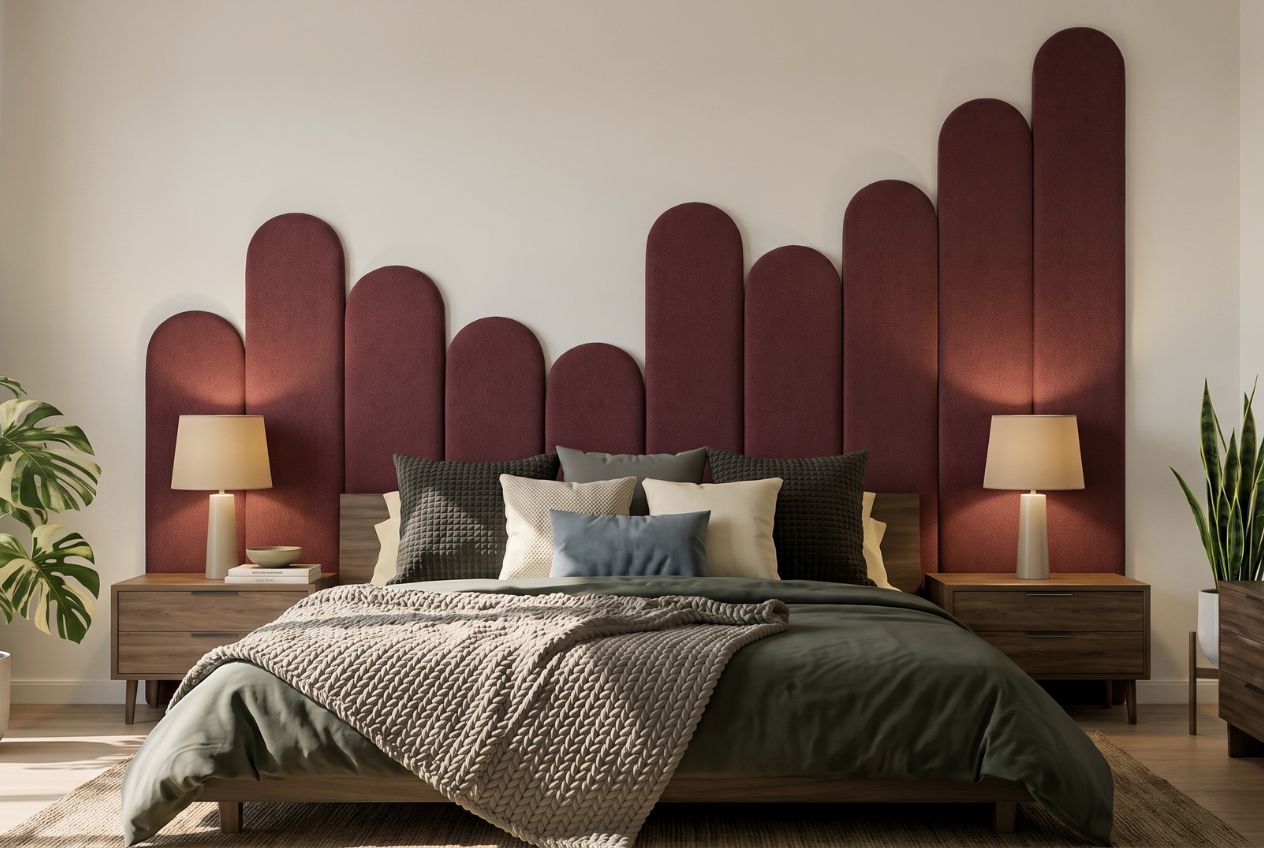
We’d suggest starting with colour samples to see how each shade sits in your light, then moving to a core kit sized for a hallway feature. A few ideas to try:
- Back a hallway console with a small DwellForms™ arrangement.
- Run a vertical stripe to draw the eye up and add visual interest.
- Frame a doorway with a compact panel cluster for a renter-friendly feature wall.
Order a sample set today and see how colour changes your hallway before you commit to a full kit.
FAQ
How can you make a dark hallway look brighter?
Layer your lighting, hang mirrors opposite lit, light-coloured surfaces, and keep the floor and walls clear. Light-coloured finishes and diffusing fittings help reflect more of the light you already have.
What colour brightens a dark hallway without paint?
Soft, light tones in runners, textiles and removable wall pieces reflect the most light. Add one warm or vivid accent through art or a DwellForms™ panel so the space feels lively rather than washed out.
What colour should you paint a hallway with no natural light?
If you can paint, pale warm tones bounce the most light. If you can’t, bring light colour in through a runner, mirrors, art and removable panels instead, since surfaces do much of the same work.
How do you lighten a dark room without paint?
Use layered lighting, light-toned textiles, mirrors placed to catch lit surfaces, and a clear layout. Warm white LEDs are typically more comfortable in homes, and removable wall features add colour without touching the paint.
Sources
- Select lighting that reduces your home energy costs | EECA
- The University of Michigan
- 6 clever ways to brighten a dark hallway
Recommended
- No Drill Hallway Echo Solutions For New Zealand Renters
- How To Decorate Without Painting Walls
- How To Transform Living Spaces Without Drilling A Hole
- Renters: 10 Nursery Wall Ideas That Need No Paint Or Drilling
This article is for general information and inspiration only. Product performance and results may vary depending on individual circumstances, surfaces and installation.